Testimony of Syed Zakir Ali, 4 May 1930, 'Evidence', IOR: L/P&J/7/75, 1931, p. 592 ... Swami Shraddhananda, Inside Congress, New Delhi, 1984, pp. 23–4. ... 183 Richard R. Cashman, The Myth of the 'Lokamanya': Tilak and Mass Politics in ... Raja Narendra Nath's presidential address, 'Proceedings of the All-India Hindu ...
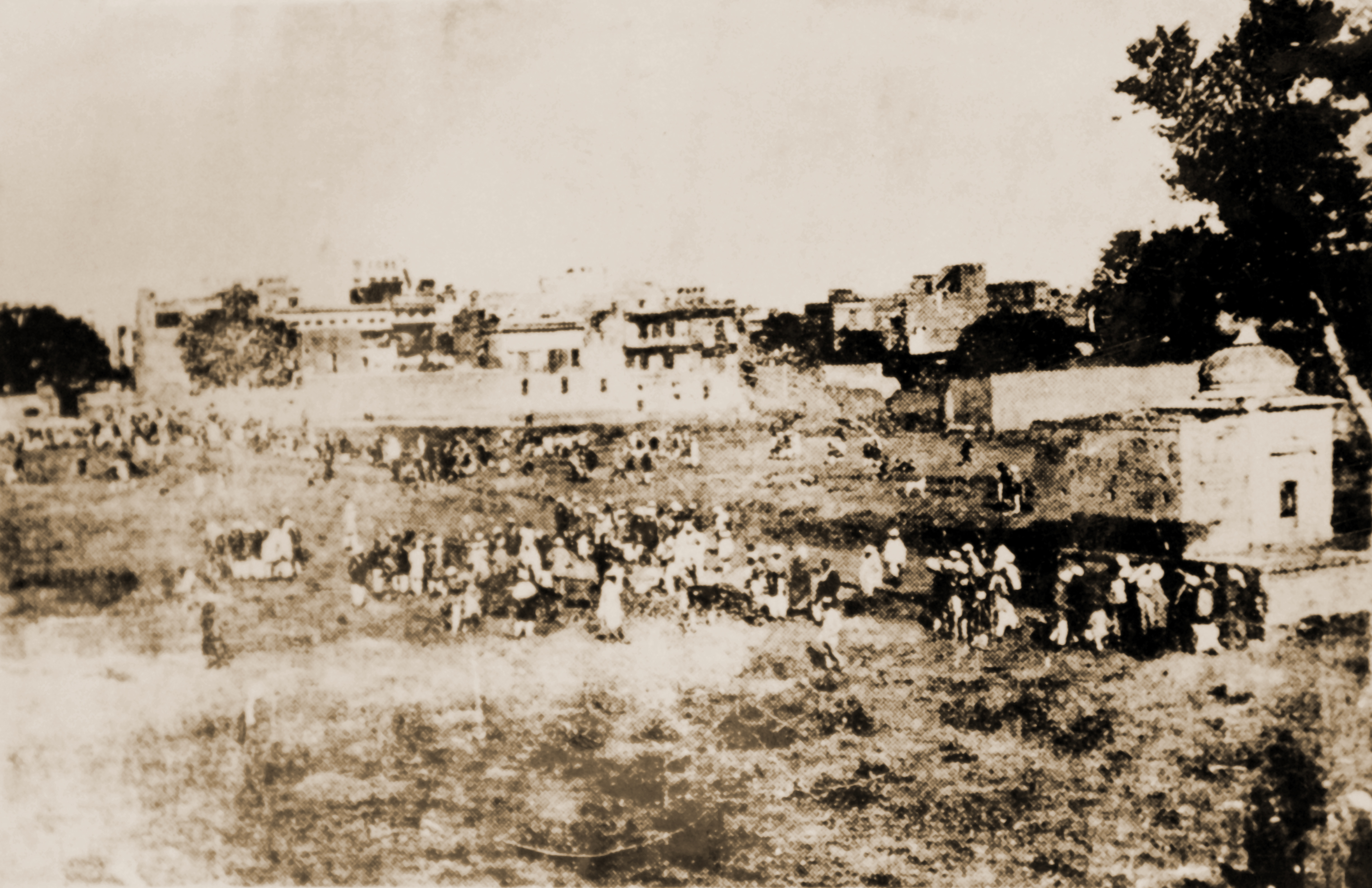
Meanwhile, events in the Punjab had moved to a tragic climax. At Amritsar, two local leaders were arrested on April 10. A crowd which had gathered to demand their release ran amuck, attacked two banks and murdered five Europeans. On the day of the Baisakhi festival, Amritsar’s Jallianwala Bagh, where a public meeting was held, became the scene of a holocaust. Under the orders of General Dyer, 1,650 rounds were fired in ten minutes: nearly 400 persons were killed, and 1,200 injured. The governor, Sir Michael O’Dwyer and his advisers made themselves believe that British rule was in danger. Martial Law was imposed on several districts in the Punjab. A draconian regime followed. The Government appointed a Committee of Inquiry headed by Lord Hunter to enquire into the genesis of the Punjab disturbances. The Indian National Congress decided to boycott the Hunter Committee and appointed a non-official committee consisting of eminent lawyers, such as C.R. Das, M.R. Jayakar, Abbas Tyabji and Gandhi. It was as a member of this non-official committee that Gandhi learnt the truth about the martial law regime in the Punjab. He discovered shocking instances of high-handedness based on incontrovertible evidence which he himself scrupulously sifted. The fanciful image of the British Empire as a merciful dispensation of Providence that he had cherished seemed to crumble to the ground.
Gandhi’s alienation from the Raj was not yet complete. He argued that the Punjab had been wronged by a few erratic officers and hoped that the government would, when it knew the truth, make amends. In this hope he was disappointed. The British officers responsible for misrule in the Punjab were not recalled immediately; indeed they were lionized by the European community. The report of the Hunter Committee, when it came out, struck Gandhi as little better than “thinly disguised whitewash’. After hearing the debate on the Punjab tragedy in the British Parliament, one Indian correspondent, wrote to Gandhi: “Our friends revealed their ignorance, our enemies their insolence.”
This 1920 illustration by German artist Eduard Thöny depicts the Amritsar massacre at Jallianwala Bagh, a tragic event during British colonial rule in India. The artwork was published in the German magazine Simplicissimus, capturing the violence and impact of the massacre.
How many of us know about the Patharughat m@ssacre of 1894 in Assam? 140 peasant freedom fighters were sh0t dead by the British and hundreds wounded at Patharughat. It took place 25 years before Jallianwala Bagh firing. This incident has been hushed up in the pages of history.
The Patharughat massacre of 1894 occurred on January 28, 1894, in , a town in the Darrang district of Assam, located 35 km northeast of Baruah Souk area of north Guwahati on the north bank of the Brahmaputra River.It was the result of a peasant uprising against the British Raj, sparked by the imposition of a 70-80% increase in agricultural land taxes, which had previously been paid in kind or through service.The protests, organized through peaceful gatherings known as Raij Mels, were perceived by colonial authorities as sedition.
On the day of the massacre, thousands of unarmed peasants assembled at Patharughat to protest the tax hike and demand a reduction.When the British district magistrate, JD Anderson, arrived with a large police force, he refused to listen to their grievances and ordered the crowd to disperse, threatening dire consequences.As the farmers continued their protest, a lathi charge was followed by open firing by the Indian Imperial Police, resulting in casualties.Official records from the Darrang District Gazetteer (1905) state that 15 peasants were killed and 37 wounded , but unofficial sources, including eyewitness accounts and local traditions, claim that around 140 peasants were killed.
The event is often referred to as Assam's Jallianwala Bagh due to its brutal suppression of peaceful protesters, and it occurred 25 years before the more widely known Jallianwala Bagh massacre of 1919.Despite its significance, the uprising remains largely absent from mainstream historical discourse on India’s freedom struggle.The site is commemorated annually on January 28 as Krishak Swahid Divas (Farmer Martyrs Day), with official functions held by the government and local people.The Indian Army pays tribute to the martyrs in a military ceremony the following day.A martyrs' column was erected at the site on January 28, 2001, by the Army and unveiled by former Governor of Assam, SK Sinha.
4 July 2025 - It is 35 km northeast of Baruah Souk area of north Guwahati on northbank of Brahmaputra River. It is the site of memorial for the Patharughat massacre caused on 28 January 1894 by the Indian Imperial Police during the Patharughat peasant uprising, the day is commemorated as the Krishak Swahid ...
24 June 2021 - This town located in the Darrang district of Assam mutely narrates an incident from 1894. Thousands of peasants assembled as a mark of protest against the colonial rule. Around 140 peasant freedom fighters were massacred here by the British. It was ...
People also ask
Which division of the Indian Army pays tribute to the Patharughat martyrs?
What are a few of the schemes that the government launched on Krishak Swahid Diwas?
28 January 2021 - “There was a lathi charge, followed ... 1905, edited by BC Allen, placed the casualties in the Patharughat incident as 15 killed and 37 wounded.”...
29 January 2021 - There was a lathi charge, followed ... 1905, edited by BC Allen, placed the casualties in the Patharughat incident as 15 killed and 37 wounded....
18 March 2022 - According to official sources, the number of casualties stood at 15 killed and 37 wounded. However, local sources say that around 140 persons lost their lives in the police firing.
19 December 2023 - On January 28, 1894, one of the earliest and biggest peasants’ revolt in British India under British rule was organized in a remote village of Assam, which has also met with a tragic end like many other peasant agitation in the later period.
28 January 2024 - In the annals of India’s freedom ... rule. The incident, immortalised as the “Patharughat Peasants Uprising,” unfolded on January 28, 1894, leaving an indelible mark on the pages of history....