Narendra Modi writes about freedom fighters - India Today
Freedom struggle history revolves around some people, families
5000 writers to pen stories on unsung freedom fighters
Indian National Army - Wikipedia
i will write about
Qadam Qadam Badhaye Ja
Qadam Qadam Badhaye Ja - Wikipedia
Ram Singh Thakuri - Wikipedia
Ram Singh Thakuri
Ram Singh Thakur | |
|---|---|
| Born | 15 August 1914 Khanyara, Dharamsala, Punjab Province, British India (now in Himachal Pradesh, India) |
| Died | 15 April 2002 (aged 87) Bhaisakund, Uttar Pradesh, India |
| Allegiance |  British India British India Azad Hind Azad Hind India India |
| Service/ |  British Indian Army British Indian ArmyIndian National Army  Indian Army Indian Army |
| Years of service | 1942–1974 |
| Rank | Company Havildar Major |
| Unit | 1st Gorkha Rifles |
| Battles/wars | Khyber-Pakhtunkhwa War |
| Awards | King George VI Coronation Medal |
| Spouse(s) | Premu Thakur |
| Other work | Band Master |
Ram Singh Thakuri 15 August 1914 – 15 April 2002) was an Indian freedom fighter, musician and composer.[1] He composed a number of patriotic songs including Kadam Kadam Badaye Ja and Subh Sukh Chain whilst serving in the Indian National Army.
Later in life, Captain Singh worked for the Uttar Pradesh Provincial Armed Constabulary (PAC) and founded the Constabulary band.
Ram Singh was born in the Khanyara, a village near Dharamsala on 15 August 1914. As the son of a serviceman, Singh was encouraged to enroll in the army. After completing school in 1922, Singh joined the 1st Gorkha Rifles as a recruit in the band. From early childhood, he had an interest in music, which was encouraged by his grandfather, Jamni Chand, who migrated from Munakot village in Pithoragarh district of Kumaon hills, Uttarakhand in 1890.
Service
In the Army, Singh combined his love for music along with his service. He trained in classical and western music as well as ballad, brass band, string band and dance band.
British Indian Army
Singh earned the King George VI medal while serving in the Khyber-Pakhtunkhwa between 1937 and 1939. Promoted in 1941 to Company Havildar Major, he was sent to Singapore and Malaya with his unit during World War II.
Indian National Army
After the Fall of Singapore, the Japanese forces took a large number of POWs. Of these, a large number volunteered to join the Indian National Army. Singh, who had initially not volunteered, was sent to Japan, where he met Netaji Subhash Chandra Bose. Singh later joined the Indian National Army as it was reorganised under the leadership of Bose. Subhas Chandra Bose was instrumental in tapping the talent of Captain Ram Singh as a dedicated music director. On his personal request, Singh composed the tunes for "Qadam Qadam Badaye Ja", the Indian National Army's (INA) marching song and now a noted patriotic song from India. He also composed the tune for "Subh Sukh Chain" (or the Qaumi Tarana as it was known), the national anthem to be adopted by Azad Hind. In 1944, Singh was decorated by Subhas Chandra Bose for his contributions. Singh also received a violin and a saxophone as gifts from Bose.
Return to India
After the end of the war, Singh was shipped back to India with his fellow soldiers. Imprisoned at the Kabul Lines of the Delhi Cantonment, Singh was released later as most of the INA troops were released without charge after widespread protests. Singh and members of his orchestra band were invited to play the National Anthem on the occasion of the Prime Minister's inaugural address to the nation at the Red Fort.
Post 1947

Ram Singh was recruited in the 3rd Battalion PAC at Lucknow Uttar Pradesh in 1948 by Shri Jagdish Prasad Bajpai [Commandant – 3rd Bn. PAC], and later was promoted as the Band Master in the Rank of Inspector. Thakur retired in 1974. Upon retirement he was accorded the honorary rank of DSP. He was known as "DSP Band UP Police" at the time of his retirement. He was honoured by the Central Government, as well as the Governments of Uttar Pradesh and Sikkim.
Final years
Captain Singh's final years were difficult and controversial, for which the Government drew much criticism.[2] He was initially denied the status of a freedom fighter by the government,[3] while the State government of Uttar Pradesh later faced contempt proceedings for withholding the corresponding payment although the amount in question was meager. A controversial court petition at one point sought to establish that he was not the composer of the National Anthem.
Captain Singh suffered an epilepsy attack in 2001, and after suffering ill health for nearly a year, died on 15 April 2002. He was cremated with State honours at Bhaisakund. However the State Government of Uttar Pradesh was again criticised for the absence of notable or prominent Government officials save a few police officers.[1]


Ram Singh Thakuri
MUST PUT HIS STATUE IN UTTAR PRADESH BY GOVERNMENT WITHOUT DELAY
Awards
Over his long career, Captain Ram Singh earned a number of awards. These included:[4]
- George VI Medal, 1937
- Netaji Gold Medal(Azad Hind), 1943
- Uttar Pradesh 1st Governor Gold Medal, 1956
- President Police Medal, 1972
- UP Sangeet Natak Akademi (UP Music and Drama Academy) Award, 1979
- Sikkim Government Mitrasen Award, 1993
- The First Azad Hind Fauj Award by the West Bengal Government in 1996
See also
- Kumaoni people
The Indian National Army,1942-45 - HistoryNet
https://www.historynet.com › indian-national-army194...It consisted of soldiers from Britain's then-colony India who had been captured by the Japanese and convinced to fight against British and Commonwealth forces.


The Indian National Army,1942-45:-THESE WERE INDIAN NATIONAL ARMY CAPTURED FIGHTING WITH JAPAN SOLDIERS IN THE EAST;WHILE THOSE INDIAN NATIONAL ARMY SOLDIERS IN THE WEST FIGHTING WITH GERMANY WAS ANNIHILATED -{SOME PUT THE BLAME ON FRENCH FREEDOM FIGHTERS BUT I AM SURE THEY WILL NOT KILL OFF THOUSANDS OF INDIAN SOLDIERS WITHOUT INFORMING BRITAIN -I SUSPECT BRITISH IN THE MASS KILLINGS IN THE FORESTS NEAR SWISS BORDER WITH FRANCE 1945
Thousands of soldiers from Britain’s “Jewel in the Crown” colony fought for the Japanese against British forces.
Perhaps more than any other conflict, World War II produced some unusual military formations that defied easy categorization. One such unit was the Indian National Army (INA) that fought for Japan in the Burma Theater 1942-45. It consisted of soldiers from Britain’s then-colony India who had been captured by the Japanese and convinced to fight against British and Commonwealth forces. Later, its ranks also included Indian civilian volunteers living in Japanese-occupied Malaya and Burma. The INA’s combat record was undistinguished, and the army arguably achieved its greatest success after the war.
The INA resulted from an informal alliance between exiled political leaders of the Indian Independence League (IIL), which sought India’s freedom from British colonial rule, and the Imperial Japanese Army (IJA). The INA existed in two distinct incarnations. In the first, it was raised and initially led by a disillusioned British Indian army officer, Captain Mohan Singh, who had been captured in the opening stages of the Japanese invasion of Malaya. After the British surrender at Singapore in February 1942, Singh recruited Indian troops of the British Indian army from Japanese prisoner of war (POW) camps with the aim of eventually fighting the British in India.
For many Indian soldiers, their experiences in the Malaya campaign – whether it was enduring British racism or seeing the previously undefeated British vanquished by the Japanese in such a convincing fashion – proved the vital catalyst in their willingness to join the INA. Few on the Allied side – British, Indian or Australian – covered themselves with glory in Malaya and Singapore, and disillusionment and recrimination was widespread following the humiliating surrender.
The British Indian army traditionally drew its recruits from the “martial races” of India that were considered indifferent to political matters and it took great efforts to insulate the troops from political ideas. However, with the ongoing agitation for India’s independence from Britain, many Indian officers had given considerable thought to India’s future. For these men, the INA was merely the logical extension of previously held political feelings.
Indeed, the loyalty of Indian officers was under suspicion well before the outbreak of war and well before the IIL or the disasters in Malaya and Singapore had a chance to politicize them further. The ongoing program of “Indianization” of the Indian army officer corps played a role in this. In 1942, a secret British report stated: “We have … bred a new class of officer who may be loyal to India and perhaps to [India’s] Congress [Party], but is not necessarily loyal to us.” And as early as 1939, British intelligence was raising concerns about the activities of Japanese nationals in Malaya: “There are indications that the local Japanese are anxious to affect rapprochement with the newly arrived Indian troops. Indian officers have been entertained by Japanese and more prominence to Indian matters is evident in the Singapore Herald, a Japanese newspaper printed in English.”
The strength of the Indian army resided in the high degree of regimental pride and a tradition of service that often existed through several generations of the same families. British officers frequently stayed with their units from subaltern up to lieutenant colonel. The outbreak of World War II in Europe, however, necessitated the expansion of the Indian army and consequently diluted many of its strengths. Existing Indian army battalions were stripped of their more seasoned noncommissioned officers and officers and received replacements with little or no experience – many of whom often could not even speak the soldiers’ language. The IIL and the Japanese skillfully exploited these weaknesses.
Disagreements between Singh and the Japanese, over both the intended size and the specific role of the INA, led to Singh’s dismissal in December 1942. His eventual replacement was a well-known political figure in the Indian independence movement, Subhas Chandra Bose. This second incarnation of the INA proved far more robust and substantial than the one under Singh.
Prewar, Bose had established an international reputation as a nationalist politician, although his belief in the best way to achieve independence increasingly brought him into conflict with other leaders of the Congress Party. Following periods in various British prisons, and after serving as president of Congress for a year in 1938, Bose fled India. He spent time in exile in Nazi Germany and there raised a small force from among Indian POWs captured by the Germans in North Africa. However, this force had little hope of actually fighting in India.
With the British defeat at Singapore, Bose saw that the best chance of winning Indian independence lay with the Japanese and the fledgling INA. But before he could make his journey to Singapore, the first INA under Singh fell apart. When Bose eventually arrived in June 1943, he was required to rebuild the INA as well as lead it.
Bose expanded the scale of the INA and overcame many of the problems that had defeated Mohan Singh. He recruited extensively among Indian civilians in Malaya as well as the POW constituency established by his predecessor. More significantly, Bose was instrumental in providing a wider, political context in which the INA could operate. He created a Japanese-sponsored Indian “provisional government” and the INA became, in effect, the military arm of what Bose considered a legitimate government-in-exile.
When Bose met with Mohan Singh in December 1943, Singh warned Bose that his hope for the collapse of Britain’s Indian army was seriously misplaced. Singh pointed out that many thousands of Indian POWs had refused to join the INA in the aftermath of the 1942 British defeat, and that the likelihood of whole units changing sides now that Japan’s fortunes were starting to wane was slim indeed. Bose reluctantly agreed that there was some truth in what Singh had said, but despite this he pressed on with his demands to see the INA join battle with the British.
At Bose’s insistence, the INA accompanied the IJA in the assault on Burma, and the so-called “Bose Brigade,” consisting of three battalions of five companies each, drew the INA’s best men and participated in the January-February 1944 Japanese attack in the Arakan and the March-July 1944 Battle of Imphal. (See You Command, November 2012 ACG.) The INA, however, fought with mixed results and its level of military effectiveness was generally low. Moreover, only a few British Indian army troops could be persuaded to cross over and join the INA.
Initial efforts by small groups of INA soldiers in a reconnaissance and intelligence gathering role did little to change the negative impressions the Japanese had of the Indians. Many were captured without performing any useful task and others surrendered to British forces as soon as the opportunity presented itself. British intelligence concluded that “the INA was not to be feared as a fighting force” but purely because of the psychological effect it might have “on a portion of the army as well as the civil population of [India].” Yet despite such fears, Bose’s frequent claim that the mere presence of the INA would prompt mass desertions proved false.
Although Bose had ensured the INA’s participation in the fighting, he was frustrated by the reluctance of the Japanese to employ the INA in anything more than secondary roles. The Japanese, at all levels of IJA command, did not think highly of the Indian soldiers, and this attitude contributed to the INA’s poor combat performance. Japanese commanders limited the size of the INA, provided it with inadequate logistical support, and gave it substandard arms and equipment. Initially, the Indian soldiers received captured Allied weapons, much of them in a poor state of repair (including “old and rusty” rifles) with a general paucity of ammunition. However, even these severe restrictions might have been overcome had the Japanese possessed the confidence to deploy the INA in tactical operations as a cohesive unit rather than in a dispersed “penny packet” fashion.
Nonetheless, some INA units, such as 1st Battalion, 2d INA Division, performed well. The Japanese felt that the Tamil troops, recruited exclusively from Malaya, had generally done far better than their ex-Indian army/ex-POW comrades. But despite Bose’s assertions that the INA should be above all else a secular organization, there is evidence that conflict between the INA’s Muslim and Sikh troops undermined both the effectiveness and the willingness of Muslim troops to fight.
As the war progressed and the Japanese position worsened, so too did that of the INA. With its soldiers dispirited and suffering low morale, the INA joined in the general retreat of Japanese 15th Army as British and Commonwealth forces recaptured Burma in 1944-45. Desertions increased considerably and Bose was obliged to introduce capital punishment in March 1945 to try to address the problem. Yet it was noted, “From April 1945 … the INA’s retreat, which had hitherto been orderly, became a rout and mass surrenders became frequent.”
With the Japanese defeat in Burma in mid-1945, the INA crumbled without ever securing the mass defections from the British Indian army that Bose had confidently predicted. Bose died in an air crash while en route to the USSR, where he had hoped to elicit Soviet aid to continue his struggle against the British to achieve India’s independence.
Arguably, the INA achieved far more after Bose’s death. With thousands of INA soldiers becoming British prisoners at the end of World War II, British authorities made a series of misjudgments regarding the prisoners’ fate that only served to fuel India’s desire for independence from Britain. The first mistake was to publicly try some former INA soldiers in November 1945 – thereby alerting the entire Indian population to the INA’s existence and pro-independence mission. British censors had carefully kept this information from the public during the war, but it was now suddenly thrust upon an increasingly restive Indian population that was more than ever ready for independence.
Britain’s next egregious misjudgment was in the selection of which INA soldiers to put on trial. The British opted to try Major General Shah Nawaz, Lieutenant Colonel P.K. Sahgal and Lieutenant Colonel G.S. Dhillon – respectively, a Muslim, a Sikh and a Hindu. Yet in their determination to demonstrate their even-handedness by selecting a representative defendant from each of India’s major religions, British authorities unwittingly united these disparate population elements in sympathy for the accused.
Compounding these issues was another misjudgment regarding the choice of location for the trial proceedings – Delhi’s Red Fort. Dating back to the 17th century, Red Fort not only was a famous symbol of India’s once-mighty independent Mughal empire, it also stirred memories of previous armed resistance to British rule, the bloody 1857 Indian Mutiny. Known as the “Red Fort Trials,” the INA proceedings ended in farce. The main accused were released after being found guilty, their sentences suspended.
Britain had hoped that the show of British resolve represented by the INA trials would cow India’s restive population, calm the growing mood of militancy among Indian nationalists, and result in widespread vilification of the INA “traitors.” That plan, however, backfired. The trials and associated publicity not only helped ensure that the INA’s anti-British, pro-independence activities became widely known, they also resulted in the INA receiving extensive popular support from the Indian population.
India’s independence, assured as soon as the July 1945 elections in Britain swept Prime Minister Clement Attlee and the Labor Party into power, was finally achieved in 1947.
.......................................................
5000 writers to pen stories on unsung freedom fighters
2-unsung Indian soldiers under Bose in Germany after 2nd world war and their mass killings at swiss border by so called french freedom fighters [most probably by British agents]
INDIAN NATIONAL ARMY OF SUBHAS CHANDRA BOSE IN GERMANY
WHEN delivered to British-HOW-shot by French??
delivered to British and Indian forces in Europe. There is some evidence that some of these Indian troops were shot by French??
WHEN delivered to British-HOW-shot by French??


The Indian National Army,1942-45 - HistoryNet
Thousands of soldiers from Britain’s “Jewel in the Crown” colony fought for the Japanese against British forces.
Perhaps more than any other conflict, World War II produced some unusual military formations that defied easy categorization. One such unit was the Indian National Army (INA) that fought for Japan in the Burma Theater 1942-45. It consisted of soldiers from Britain’s then-colony India who had been captured by the Japanese and convinced to fight against British and Commonwealth forces. Later, its ranks also included Indian civilian volunteers living in Japanese-occupied Malaya and Burma. The INA’s combat record was undistinguished, and the army arguably achieved its greatest success after the war.
The INA resulted from an informal alliance between exiled political leaders of the Indian Independence League (IIL), which sought India’s freedom from British colonial rule, and the Imperial Japanese Army (IJA). The INA existed in two distinct incarnations. In the first, it was raised and initially led by a disillusioned British Indian army officer, Captain Mohan Singh, who had been captured in the opening stages of the Japanese invasion of Malaya. After the British surrender at Singapore in February 1942, Singh recruited Indian troops of the British Indian army from Japanese prisoner of war (POW) camps with the aim of eventually fighting the British in India.
For many Indian soldiers, their experiences in the Malaya campaign – whether it was enduring British racism or seeing the previously undefeated British vanquished by the Japanese in such a convincing fashion – proved the vital catalyst in their willingness to join the INA. Few on the Allied side – British, Indian or Australian – covered themselves with glory in Malaya and Singapore, and disillusionment and recrimination was widespread following the humiliating surrender.
The British Indian army traditionally drew its recruits from the “martial races” of India that were considered indifferent to political matters and it took great efforts to insulate the troops from political ideas. However, with the ongoing agitation for India’s independence from Britain, many Indian officers had given considerable thought to India’s future. For these men, the INA was merely the logical extension of previously held political feelings.
Indeed, the loyalty of Indian officers was under suspicion well before the outbreak of war and well before the IIL or the disasters in Malaya and Singapore had a chance to politicize them further. The ongoing program of “Indianization” of the Indian army officer corps played a role in this. In 1942, a secret British report stated: “We have … bred a new class of officer who may be loyal to India and perhaps to [India’s] Congress [Party], but is not necessarily loyal to us.” And as early as 1939, British intelligence was raising concerns about the activities of Japanese nationals in Malaya: “There are indications that the local Japanese are anxious to affect rapprochement with the newly arrived Indian troops. Indian officers have been entertained by Japanese and more prominence to Indian matters is evident in the Singapore Herald, a Japanese newspaper printed in English.”
The strength of the Indian army resided in the high degree of regimental pride and a tradition of service that often existed through several generations of the same families. British officers frequently stayed with their units from subaltern up to lieutenant colonel. The outbreak of World War II in Europe, however, necessitated the expansion of the Indian army and consequently diluted many of its strengths. Existing Indian army battalions were stripped of their more seasoned noncommissioned officers and officers and received replacements with little or no experience – many of whom often could not even speak the soldiers’ language. The IIL and the Japanese skillfully exploited these weaknesses.
Disagreements between Singh and the Japanese, over both the intended size and the specific role of the INA, led to Singh’s dismissal in December 1942. His eventual replacement was a well-known political figure in the Indian independence movement, Subhas Chandra Bose. This second incarnation of the INA proved far more robust and substantial than the one under Singh.
Prewar, Bose had established an international reputation as a nationalist politician, although his belief in the best way to achieve independence increasingly brought him into conflict with other leaders of the Congress Party. Following periods in various British prisons, and after serving as president of Congress for a year in 1938, Bose fled India. He spent time in exile in Nazi Germany and there raised a small force from among Indian POWs captured by the Germans in North Africa. However, this force had little hope of actually fighting in India.
With the British defeat at Singapore, Bose saw that the best chance of winning Indian independence lay with the Japanese and the fledgling INA. But before he could make his journey to Singapore, the first INA under Singh fell apart. When Bose eventually arrived in June 1943, he was required to rebuild the INA as well as lead it.
Bose expanded the scale of the INA and overcame many of the problems that had defeated Mohan Singh. He recruited extensively among Indian civilians in Malaya as well as the POW constituency established by his predecessor. More significantly, Bose was instrumental in providing a wider, political context in which the INA could operate. He created a Japanese-sponsored Indian “provisional government” and the INA became, in effect, the military arm of what Bose considered a legitimate government-in-exile.
When Bose met with Mohan Singh in December 1943, Singh warned Bose that his hope for the collapse of Britain’s Indian army was seriously misplaced. Singh pointed out that many thousands of Indian POWs had refused to join the INA in the aftermath of the 1942 British defeat, and that the likelihood of whole units changing sides now that Japan’s fortunes were starting to wane was slim indeed. Bose reluctantly agreed that there was some truth in what Singh had said, but despite this he pressed on with his demands to see the INA join battle with the British.
At Bose’s insistence, the INA accompanied the IJA in the assault on Burma, and the so-called “Bose Brigade,” consisting of three battalions of five companies each, drew the INA’s best men and participated in the January-February 1944 Japanese attack in the Arakan and the March-July 1944 Battle of Imphal. (See You Command, November 2012 ACG.) The INA, however, fought with mixed results and its level of military effectiveness was generally low. Moreover, only a few British Indian army troops could be persuaded to cross over and join the INA.
Initial efforts by small groups of INA soldiers in a reconnaissance and intelligence gathering role did little to change the negative impressions the Japanese had of the Indians. Many were captured without performing any useful task and others surrendered to British forces as soon as the opportunity presented itself. British intelligence concluded that “the INA was not to be feared as a fighting force” but purely because of the psychological effect it might have “on a portion of the army as well as the civil population of [India].” Yet despite such fears, Bose’s frequent claim that the mere presence of the INA would prompt mass desertions proved false.
Although Bose had ensured the INA’s participation in the fighting, he was frustrated by the reluctance of the Japanese to employ the INA in anything more than secondary roles. The Japanese, at all levels of IJA command, did not think highly of the Indian soldiers, and this attitude contributed to the INA’s poor combat performance. Japanese commanders limited the size of the INA, provided it with inadequate logistical support, and gave it substandard arms and equipment. Initially, the Indian soldiers received captured Allied weapons, much of them in a poor state of repair (including “old and rusty” rifles) with a general paucity of ammunition. However, even these severe restrictions might have been overcome had the Japanese possessed the confidence to deploy the INA in tactical operations as a cohesive unit rather than in a dispersed “penny packet” fashion.
Nonetheless, some INA units, such as 1st Battalion, 2d INA Division, performed well. The Japanese felt that the Tamil troops, recruited exclusively from Malaya, had generally done far better than their ex-Indian army/ex-POW comrades. But despite Bose’s assertions that the INA should be above all else a secular organization, there is evidence that conflict between the INA’s Muslim and Sikh troops undermined both the effectiveness and the willingness of Muslim troops to fight.
As the war progressed and the Japanese position worsened, so too did that of the INA. With its soldiers dispirited and suffering low morale, the INA joined in the general retreat of Japanese 15th Army as British and Commonwealth forces recaptured Burma in 1944-45. Desertions increased considerably and Bose was obliged to introduce capital punishment in March 1945 to try to address the problem. Yet it was noted, “From April 1945 … the INA’s retreat, which had hitherto been orderly, became a rout and mass surrenders became frequent.”
With the Japanese defeat in Burma in mid-1945, the INA crumbled without ever securing the mass defections from the British Indian army that Bose had confidently predicted. Bose died in an air crash while en route to the USSR, where he had hoped to elicit Soviet aid to continue his struggle against the British to achieve India’s independence.
Arguably, the INA achieved far more after Bose’s death. With thousands of INA soldiers becoming British prisoners at the end of World War II, British authorities made a series of misjudgments regarding the prisoners’ fate that only served to fuel India’s desire for independence from Britain. The first mistake was to publicly try some former INA soldiers in November 1945 – thereby alerting the entire Indian population to the INA’s existence and pro-independence mission. British censors had carefully kept this information from the public during the war, but it was now suddenly thrust upon an increasingly restive Indian population that was more than ever ready for independence.
Britain’s next egregious misjudgment was in the selection of which INA soldiers to put on trial. The British opted to try Major General Shah Nawaz, Lieutenant Colonel P.K. Sahgal and Lieutenant Colonel G.S. Dhillon – respectively, a Muslim, a Sikh and a Hindu. Yet in their determination to demonstrate their even-handedness by selecting a representative defendant from each of India’s major religions, British authorities unwittingly united these disparate population elements in sympathy for the accused.
Compounding these issues was another misjudgment regarding the choice of location for the trial proceedings – Delhi’s Red Fort. Dating back to the 17th century, Red Fort not only was a famous symbol of India’s once-mighty independent Mughal empire, it also stirred memories of previous armed resistance to British rule, the bloody 1857 Indian Mutiny. Known as the “Red Fort Trials,” the INA proceedings ended in farce. The main accused were released after being found guilty, their sentences suspended.
Britain had hoped that the show of British resolve represented by the INA trials would cow India’s restive population, calm the growing mood of militancy among Indian nationalists, and result in widespread vilification of the INA “traitors.” That plan, however, backfired. The trials and associated publicity not only helped ensure that the INA’s anti-British, pro-independence activities became widely known, they also resulted in the INA receiving extensive popular support from the Indian population.
India’s independence, assured as soon as the July 1945 elections in Britain swept Prime Minister Clement Attlee and the Labor Party into power, was finally achieved in 1947.
WHEN delivered to British-HOW-shot by French??
THESE WERE INDIAN NATIONAL ARMY CAPTURED FIGHTING WITH JAPAN SOLDIERS IN THE EAST;WHILE THOSE INDIAN NATIONAL ARMY SOLDIERS IN THE WEST FIGHTING WITH GERMANY WAS ANNIHILATED -{SOME PUT THE BLAME ON FRENCH FREEDOM FIGHTERS BUT I AM SURE THEY WILL NOT KILL OFF THOUSANDS OF INDIAN SOLDIERS WITHOUT INFORMING BRITAIN -I SUSPECT BRITISH IN THE MASS KILLINGS IN THE FORESTS NEAR SWISS BORDER WITH FRANCE 1945
WHEN delivered to British-HOW-shot by French??
End of the Legion
With the defeat of the Third Reich imminent in May 1945, the remainder of the Indian Legion stationed in Germany sought sanctuary in neutral Switzerland. They undertook a desperate 2.6-kilometre (1.6 mi) march along the shores of Lake Constance, attempting to enter Switzerland via the alpine passes. This was, however, unsuccessful and the legion was captured by US and French forces and delivered to British in Europe. There is some evidence that some of these Indian troops were shot by French Moroccan troops in the town of Immenstadt after their capture, before they could be delivered to the British forces.[31] The captured troops would later be shipped back to India, where a number would stand trial for treason.[23]
THIS IS A LIE -WHY SHOULD FRENCH KILL INDIAN SOLDIERS WHEN THEY WERE HANDED OVER TO BRITISH IN 1945 "captured by US and French forces and delivered to British"these Indian troops were shot by
WHEN delivered to British-HOW-shot by French??
Indian Legion
| Free India Legion | |
|---|---|
| German: Legion Freies Indien | |
 Flag of the Indian Legion | |
| Active | 1941 – May 1945 |
| Allegiance |  Nazi Germany Nazi Germany |
| Branch |
|
| Type | Infantry |
| Size | 4,500 (maximum)[1] |
| Garrison/HQ | |
| Nickname(s) | "Tiger Legion" "Azad Hind Fauj" |
| Engagements | World War II |
| Commanders | |
| Notable commanders |
|
| Insignia | |
| Badge |  |
| Banner |  |


The Indian Legion (German: Indische Legion), officially the Free India Legion (German: Legion Freies Indien) or 950th (Indian) Infantry Regiment (German: Infanterie-Regiment 950 (indisches)), was a military unit raised during the Second World War initially as part of the German Army and later the Waffen-SS from August 1944. Intended to serve as a liberation force for British-ruled India, it was made up of Indian prisoners of war and expatriates in Europe. Due to its origins in the Indian independence movement, it was known also as the "Tiger Legion", and the "Azad Hind Fauj". As part of the Waffen-SS it was known as the Indian Volunteer Legion of the Waffen-SS (German: Indische Freiwilligen Legion der Waffen-SS).
Indian independence leader Subhas Chandra Bose initiated the legion's formation, as part of his efforts to win India's independence by waging war against Britain, when he came to Berlin in 1941 seeking German aid. The initial recruits in 1941 were volunteers from the Indian students resident in Germany at the time, and a handful of the Indian prisoners of war who had been captured during the North Africa Campaign. It would later draw a larger number of Indian prisoners of war as volunteers.
Though it was initially raised as an assault group that would form a pathfinder to a German–Indian joint invasion of the western frontiers of British India, only a small contingent was ever put to its original intended purpose. A small contingent, including much of the Indian officer corps and enlisted leadership, was transferred to the Indian National Army in South-East Asia. The majority of the troops of the Indian Legion were given only non-combat duties in the Netherlands and in France until the Allied invasion. They saw action in the retreat from the Allied advance across France, fighting mostly against the French Resistance. One company was sent to Italy in 1944, where it saw action against British and Polish troops and undertook anti-partisan operations.
At the time of the surrender of Nazi Germany in 1945, the remaining men of the Indian Legion made efforts to march to neutral Switzerland over the Alps, but these efforts proved futile as they were captured by American and French troops and eventually shipped back to India to face charges of treason. After the uproar the trials of Indians who served with the Axis caused among civilians and the military of British India, the legion members' trials were not completed.
Background


The idea of raising an armed force that would fight its way into India to bring down the British Raj goes back to the First World War, when the Ghadar Party and the then nascent Indian Independence League formulated plans to initiate rebellion in the British Indian Army from Punjab to Hong Kong with German support. This plan failed after information leaked to British intelligence, but only after many attempts at mutiny, and a 1915 mutiny of Indian troops in Singapore.[2][3] During World War II, all three of the major Axis Powers sought to support armed revolutionary activities in India, and aided the recruitment of a military force from Indian POWs captured while serving in the British Indian Army and Indian expatriates.[4]
The most notable and successful Indian force to fight with the Axis was the Indian National Army (INA) in southeast Asia, that came into being with the support of the Japanese Empire in April 1942. Fascist Italy also created the Azad Hindustan Battalion (Italian: Battaglione Azad Hindoustan) in February 1942. This unit was formed from Indian POWs from their Centro I POW camp, and Italians previously resident in India and Persia, and ultimately served under the Ragruppamento Centri Militari alongside units of Arabs and colonial Italians. However, the effort had little acceptance from the Indians in the unit, who did not wish to serve under Italian officers.[5][6] After the Italian loss at the Second Battle of El Alamein, the Indians mutinied when told to fight in Libya. Consequently, the remnants of the battalion were disbanded in November 1942.[7][8]
Although the Indian National Congress (INC), the organisation leading the struggle for Indian independence, had passed resolutions conditionally supporting the fight against fascism,[9] some Indian public opinion was more hostile toward Britain's unilateral decision to declare India a belligerent on the side of the Allies. Among the more rebellious Indian political leaders of the time was Subhas Chandra Bose, a former INC president, who was viewed as a potent enough threat by the British that he was arrested when the war started.[10] Bose escaped from house arrest in India in January 1941 and made his way through Afghanistan to the Soviet Union, with some help from Germany's military intelligence, the Abwehr. Bose, ideologically a Communist was inclined to the Soviet Union for aid.
Once he reached Moscow, he did not receive the expected Soviet support for his plans for a popular uprising in India. The Soviets were navigating a complex geopolitical and strategic web and did not want to break any potential alliance with the Allies in case of an impending German invasion. The German ambassador in Moscow, Count von der Schulenberg, soon arranged for Bose to go to Berlin. He arrived at the beginning of April 1941, and he met with foreign minister Joachim von Ribbentrop and later Adolf Hitler.[11] In Berlin, Bose set up the Free India Centre and Azad Hind Radio, which commenced broadcasting to Indians on shortwave frequencies, reaching tens of thousands of Indians who had the requisite receiver.[12][13] Soon Bose's aim became to raise an army, which he imagined would march into India with German forces and trigger the downfall of the Raj.[14]
Origin

The first troops of the Indian Legion were recruited from Indian POWs captured at El Mekili, Libya during the battles for Tobruk. The German forces in the Western Desert selected a core group of 27 POWs as potential officers and they were flown to Berlin in May 1941, to be followed, after the Centro I experiment, by POWs being transferred from the Italian forces to Germany.[15] The number of POWs transferred to Germany grew to about 10,000 who were eventually housed at Annaburg camp, where Bose first met with them. A first group of 300 volunteers from the POWs and Indians expatriates in Germany were sent to Frankenberg camp near Chemnitz, to train and convince arriving POWs to join the legion.[16]
As the numbers of POWs joining the legion swelled, the legion was moved to Königsbrück for further training.[16] It was at Königsbrück that uniforms were first issued, in German feldgrau with the badge of the leaping tiger of Azad Hind. The formation of the Indian National Army was announced by the German Propaganda Ministry in January 1942. It did not, however, take oath until 26 August 1942, as the Legion Freies Indien of the German Army. By May 1943, the numbers had swelled, aided by the enlistment as volunteers of Indian expatriates.[15]
Overall, there were about 15,000 Indian POWs in Europe, primarily held in Germany by 1943. While some remained loyal to the King-Emperor and treated Bose and the Legion with contempt, most were at least somewhat sympathetic to Bose's cause. While approximately 2,000 became legionnaires, some others did not complete their training due to various reasons and circumstances.[15][17] In total, the maximum size of the Legion was 4,500.[1]
Bose sought and obtained agreement from the German High Command for the rather remarkable terms by which the Legion would serve in German military. German soldiers would train the Indians in the strictest military discipline, in all branches of infantry in using weapons and motorized units, the same way a German formation was trained; the Indian legionnaires were not to be mixed with any German structures; they were not to be sent to any front other than in India for fighting against the British—but would be allowed to fight in self-defence at any other place; and nonetheless in all other respects, the legionnaires would enjoy the same facilities and amenities regarding pay, clothing, food, leave, etc., as German soldiers. As for the unit's eventual deployments in the Netherlands and France, they were ostensibly for training purposes, according to Bose's plans for the unit to be trained in some aspects of coastal defence.[18] After the invasion of France by the Allies, the unit was ordered back to Germany, so that it would not participate in fighting for German military interests.
Organization
Composition


The British Indian Army organised regiments and units on the basis of religion and regional or caste identity. Bose sought to end this practice and build up one unified Indian identity among the men who would fight for independence. Consequently, the Indian Legion was organised as mixed units so that Muslims, Hindus and Sikhs all served side-by-side.[6] Around the time of its formation in late 1942, 59% of the legion's men were Hindus, 25% were Muslims, 14% were Sikhs and 2% other religions. Relative to the British Indian Army, there were more Hindus and Sikhs, and fewer Muslims.[19]
The success of Bose's idea of developing a unified national identity was evident when Heinrich Himmler proposed in late 1943 (after Bose's departure) that the Muslim soldiers of the I.R. 950 be recruited into the new Handschar Division. The commander of the SS Head Office, Gottlob Berger, was obliged to point out that while the Bosnians of the "Handschar" perceived themselves as people of a European identity, Indian Muslims perceived themselves as Indians.[20] Hitler, however, showed little enthusiasm for the I.R. 950, at one stage insisting that their weapons be handed over to the newly created 18th SS Horst Wessel Division, exclaiming that "…the Indian Legion is a joke!"[6]
Uniform and standard


The uniform issued to the Indian Legion were the standard German Army uniform of feldgrau in winter and khaki in summer. Additionally, the troops wore on their right upper arm a specially designed arm badge in the shape of a shield with three horizontal stripes of saffron, white, and green and featuring a leaping tiger on the white middle band. The legend Freies Indien was inscribed in black featured on a white background above the tricolor. A saffron, white, and green transfer was also worn on the left side of their steel helmets, similar to the black, white, and red decal German soldiers wore on their helmets. Sikhs in the legion were permitted to wear a turban as dictated by their religion instead of the usual peaked field cap, of a colour appropriate to their uniform.
The standard of the Indian Legion, presented as the unit's colours in late 1942 or early 1943, featured the same design as the arm badge previously issued to the men of the Legion. It consisted of saffron, white and green horizontal bands, from top to bottom, the white middle band was approximately three times the width of the coloured bands. The words "Azad" and "Hind" in white were inscribed over the saffron and green bands respectively, and over the white middle band was a leaping tiger. This is essentially the same design that the Azad Hind Government later adopted as their flag (although photographic evidence shows that the Indian National Army, at least during the Burma Campaign, used the Swaraj flag of the INC instead).[21]
Decorations
In 1942, Bose instituted several medals and orders for service to Azad Hind. As was typical for German decorations, crossed swords were added when they were issued for action in combat. Nearly half of the soldiers of the legion received one of these decorations.[22]
Structure and units
The Indian Legion was organised as a standard German army infantry regiment of three battalions of four companies each, at least initially with exclusively German commissioned officers. It has been later referred to as Panzergrenadier Regiment 950 (indische), indicating the unit was partially motorised.[23] It was equipped with 81 motor vehicles and 700 horses.[24] In this structure, the legion came to consist of:
- I. Bataillon – infantry companies 1 to 4
- II. Bataillon – infantry companies 5 to 8
- III. Bataillon – infantry companies 9 to 12
- 13. Infanteriegeschütz Kompanie (infantry-gun company – armed with six 7.5 cm leichtes Infanteriegeschütz 18)
- 14. Panzerjäger Kompanie (anti-tank company – armed with six Panzerabwehrkanone)
- 15. Pionier Kompanie (engineer company)
- Ehrenwachkompanie (honour guard company)
It also included hospital, training, and maintenance staff.[24]
Operations


It is doubtful that Subhas Chandra Bose envisaged the Free India Legion would ever be an army sufficient or strong enough to conduct an effective campaign across Persia into India on its own. Instead, the IR 950 was to become a pathfinder, preceding a larger Indo-German force in a Caucasian campaign into the western frontiers of British India, that would encourage public resentment of the Raj and incite the British Indian Army into revolt.
Following German defeat in Europe at Stalingrad and in North Africa at El Alamein, it became clear that an Axis assault through Persia or even the Soviet Union was unlikely. Meanwhile, Bose had travelled to the Far East, where the Indian National Army was able to engage the Allies alongside the Japanese Army in Burma, and ultimately in northeastern India. The German Naval High Command at this time made the decision to transfer much of the leadership and a segment of the Free India Legion to South Asia and on 21 January, they were formally made a part of the Indian National Army. Most troops of the Indian Legion, however, remained in Europe through the war and were never utilised in their originally planned role.
Adrian Weale has written that about 100 members of the Indian Legion were parachuted into eastern Persia in January 1942 tasked with infiltrating Baluchistan Province as Operation Bajadere.[25] However, Adrian O'Sullivan has described such an operation as being "mythical", as it was logistically impossible, and no documentary evidence demonstrates it ever took place.[26]
Netherlands and France

The legion was transferred to Zeeland in the Netherlands in April 1943 as part of the Atlantic Wall and later to France in September 1943, attached to the 344th Infantry Division and later the 159th Infantry Division of the Wehrmacht. From Beverloo in Belgium, the 1st Battalion was reassigned to Zandvoort in May 1943 where they stayed until relieved by the Georgian Legion in August. In September 1943, the battalion was deployed on the Atlantic coast of Bordeaux on the Bay of Biscay. The 2nd Battalion moved from Beverloo to the island of Texel in May 1943 and stayed there until relieved in September of that year. From here, it was deployed to Les Sables-d'Olonne in France.[27] The 3rd Battalion remained at Oldebroek as Corps Reserve until the end of September 1943,[27] where they gained a "wild and loathsome"[28] reputation amongst the locals.
Transfer to the Waffen-SS
The legion was stationed in the Lacanau (near Bordeaux) at the time of the Normandy landings, and remained there for up to two months after D-Day. In July 1944, the legion was tasked with suppressing the French Resistance and capturing civilians for the purposes of forced labour. Whilst suppressing the French resistance in August 1944, 25 legionaries deserted to the French Resistance. Despite being promised that they would be handed over to Allied Forces, the group of legionaries were executed by anarchist elements of the French Resistance.[29] On 8 August 1944 Himmler authorised its control to be transferred to the Waffen-SS, as was that of every other foreign volunteer unit of the German Army.[6] The unit was renamed the Indische Freiwilligen Legion der Waffen-SS. Command of the legion was very shortly transferred from Obersturmbannführer Kurt Krapp to Oberführer Heinz Bertling. The Indian personnel noticed a change of command was at hand and started to complain. Noting he wasn't "wanted", Bertling soon agreed to be relieved of command.[30]
On 15 August, the unit pulled out of Lacanau to make its way back to Germany. It was in the second leg of this journey, from Poitiers to Châteauroux that it suffered its first combat casualty (Lieutenant Ali Khan) while engaging French regular forces in the town of Dun. The unit also engaged with Allied armour at Nuits-Saint-Georges while retreating across the Loire to Dijon. It was regularly harassed by the French Resistance, suffering two more casualties (Lieutenant Kalu Ram and Captain Mela Ram). The unit moved from Remiremont through Alsace to Camp Heuberg in Germany in the winter of 1944,[23] where it stayed until March 1945.
Italy
The 9th Company of the Legion (from the 2nd Battalion) also saw action in Italy. Having been deployed in the spring of 1944, it faced the British V Corps and the Polish II Corps before it was withdrawn from the front to be used in anti-partisan operations. It surrendered to the Allied forces in April 1945, still in Italy.[30]
End of the LegionWHEN delivered to British-HOW-shot by French??
With the defeat of the Third Reich imminent in May 1945, the remainder of the Indian Legion stationed in Germany sought sanctuary in neutral Switzerland. They undertook a desperate 2.6-kilometre (1.6 mi) march along the shores of Lake Constance, attempting to enter Switzerland via the alpine passes. This was, however, unsuccessful and the legion was captured by US and French forces and delivered to British and Indian forces in Europe. There is some evidence that some of these Indian troops were shot by French?? Moroccan troops in the town of Immenstadt after their capture, before they could be delivered to the British forces.[31] The captured troops would later be shipped back to India, where a number would stand trial for treason.[23]
Legacy
The integral association of the Free India Legion with Nazi Germany and the other Axis powers means its legacy is seen from two viewpoints, similarly to other nationalist movements that were aligned with Germany during the war, such as the Russian Vlasov movement. One viewpoint sees it as a collaborationist unit of the Third Reich; the other views it as the realisation of a liberation army to fight against the British Raj.[32]
Unlike the Indian National Army, conceived with the same doctrine,[13] it has found little exposure since the end of the war even in independent India. This is because it was far removed from India, unlike Burma, and because the Legion was so much smaller than the INA and was not engaged in its originally conceived role.[32] Bose's plans for the Legion, and even the INA, were too grandiose for their military capability and their fate was too strongly tied to that of the Axis powers.[33] Looking at the legacy of Azad Hind, however, historians consider both movements' military and political actions (of which the Legion was one of the earliest elements, and an integral part of Bose's plans) and the indirect effect they had on the era's events.
In German histories of the Second World War, the Legion is noted less than other foreign volunteer units. Filmmaker and author Merle Kröger, however, made the 2003 mystery novel Cut! about soldiers from the Legion in France. She said she found them an excellent topic for a mystery because scarcely any Germans had heard of the Indians who volunteered for the German Army.[32] The only Indian film to mention the Legion is the 2011 Bollywood production Dear Friend Hitler, which portrays the Legion's attempted escape to Switzerland and its aftermath.
WHEN delivered to British-HOW-shot by French??
Perceptions as collaborators
In considering the history of the Free India Legion, the most controversial aspect is its integral link to Nazi Germany, with a widespread perception that they were collaborators with Nazi Germany by virtue of their uniform, oath and field of operation. The views of the founder and leader of the Azad Hind movement, Subhas Chandra Bose, were somewhat more nuanced than straightforward support for the Axis. During the 1930s Bose had organised and led protest marches against Japanese imperialism, and wrote an article attacking Japanese imperialism, although expressing admiration for other aspects of the Japanese regime.[34] Bose's correspondence prior to 1939 also showed his deep disapproval of the racist practices and annulment of democratic institutions by the Nazis.[35] He nonetheless expressed admiration for the authoritarian methods which he saw in Italy and Germany during the 1930s, and thought they could be used in building an independent India.[36]
Bose's view was not necessarily shared by the men of the Free India Legion, and they were not wholly party to Nazi ideology or in collaboration with the Nazi machinery. The Legion's volunteers were not merely motivated by the chance to escape imprisonment and earn money. Indeed, when the first POWs were brought to Annaburg and met with Subhas Chandra Bose, there was marked and open hostility towards him as a Nazi propaganda puppet.[37] Once Bose's efforts and views had gained more sympathy, a persistent query among the POWs was 'How would the legionary stand in relation to the German soldier?'.[37] The Indians were not prepared to simply fight for Germany's interests, after abandoning their oath to the King-Emperor. The Free India Centre—in charge of the legion after the departure of Bose—faced a number of grievances from legionaries. The foremost were that Bose had abandoned them and left them entirely in German hands, and a perception that the Wehrmacht was now going to use them in the Western Front instead of sending them to fight for independence.[38]
The attitude of the Legion's soldiers was similar to that of the Italian Battaglione Azad Hindoustan, which had been of dubious loyalty to the Axis cause—it was disbanded after a mutiny.[7][8] In one instance, immediately prior to the first deployment of the Legion in the Netherlands in April 1943, after the departure of the 1st Battalion from Königsbrück, two companies within the 2nd Battalion refused to move until convinced by Indian leaders.[38] Even in Asia, where the Indian National Army was much larger and fought the British directly, Bose faced similar obstacles at first. All of this goes to show that many of the men never possessed loyalty to the Nazi cause or ideology; the motivation of the Legion's men was to fight for India's independence.[38] The unit did allegedly participate in atrocities, especially in the Médoc region in July 1944,[39] and in the region of Ruffec, including rapes and child murder[28] and the department of Indre during their retreat,[40] and in addition, some elements of the unit undertook anti-partisan operations in Italy.
Role in Indian independence
However, in political terms Bose may have been successful, owing to events that occurred within India after the war.[7][8] After the war, the soldiers and officers of the Free India Legion were brought as prisoners to India, where they were to be brought to trial in courts-martial along with Indians who were in the INA. Their stories were seen as so inflammatory that, fearing mass revolts and uprisings across the empire, the British government forbade the BBC from broadcasting about them after the war.[28] Not much is known of any charges made against Free India Legion soldiers, but the Indian National Army trials that were initiated had the sentences they issued commuted or charges dropped, after widespread protest and several mutinies.
As a condition of independence readily agreed to by the INC, members of the Free India Legion and INA were not allowed to serve in the post-independence Indian military, but they were all released before independence. Once the stories reached the public, there was a turnaround in perception of the Azad Hind movement from traitors and collaborators to patriots. Although the authorities expected to improve the morale of their troops by prosecuting the Azad Hind volunteers, they only contributed to the sentiment among many members of the military that they had been on the wrong side during the war.[41][42] According to historian Michael Edwardes, the "INA and Free India Legion thus overshadowed the conference that was to lead to independence, held in the same Red Fort as the trials".[41]
Inspired to a large extent by the stories of the soldiers at trial, mutiny broke out in the Royal Indian Navy, and received widespread public support. While the troops who fought for the Allies were being demobilised, the Navy mutiny was followed up by smaller mutinies in the Royal Indian Air Force, and a mutiny in the Indian Army that was suppressed by force. In the aftermath of the mutinies, the weekly intelligence summary issued on 25 March 1946 admitted that the Indian military was no longer trustworthy, and for the Army, "only day to day estimates of steadiness could be made".[43][8] The armed forces could not be relied upon to suppress unrest as they had been before, and drawing from experiences of the Free India Legion and INA, their actions could not be predicted from their oath to the King-Emperor.[44][45]
Reflecting on the factors that guided the British decision to relinquish their rule in India, Clement Attlee, then the British Prime Minister, cited as the most important reason the realisation that the Indian armed forces might not prop up the Raj.[46] Although the British government had promised to grant dominion status to India at the end of the war,[47][48] the views held by British officials after the war show[citation needed] that although militarily a failure the Indians who fought for the Axis likely accelerated Indian independence.
See also
- Indian National Army
- Battaglione Azad Hindoustan
- British Free Corps
- Free Arabian Legion
- Arzi Hukumat-e-Azad Hind


Immenstadt
HOW MANY INDIAND MASSACRED NOBODY KNOWS EXCEPT BRITISH TO WHOM THE CAPTURED SOLDIERS WERE HANDED OVER AS MENTIONED HERE IN THIS WIKIPEDIA NARRATIVE
Indian Legion
| Free India Legion | |
|---|---|
| German: Legion Freies Indien | |
Flag of the Indian Legion | |
| Active | 1941 – May 1945 |
| Allegiance | Nazi Germany |
| Branch |
|
| Type | Infantry |
| Size | 4,500 (maximum)[1] |
| Garrison/HQ | |
| Nickname(s) | "Tiger Legion" "Azad Hind Fauj" |
| Engagements | World War II |
| Commanders | |
| Notable commanders |
|
| Insignia | |
| Badge | |
| Banner | |
The Indian Legion (German: Indische Legion), officially the Free India Legion (German: Legion Freies Indien) or 950th (Indian) Infantry Regiment (German: Infanterie-Regiment 950 (indisches)), was a military unit raised during the Second World War initially as part of the German Army and later the Waffen-SS from August 1944. Intended to serve as a liberation force for British-ruled India, it was made up of Indian prisoners of war and expatriates in Europe. Due to its origins in the Indian independence movement, it was known also as the "Tiger Legion", and the "Azad Hind Fauj". As part of the Waffen-SS it was known as the Indian Volunteer Legion of the Waffen-SS (German: Indische Freiwilligen Legion der Waffen-SS).
Indian independence leader Subhas Chandra Bose initiated the legion's formation, as part of his efforts to win India's independence by waging war against Britain, when he came to Berlin in 1941 seeking German aid. The initial recruits in 1941 were volunteers from the Indian students resident in Germany at the time, and a handful of the Indian prisoners of war who had been captured during the North Africa Campaign. It would later draw a larger number of Indian prisoners of war as volunteers.
Though it was initially raised as an assault group that would form a pathfinder to a German–Indian joint invasion of the western frontiers of British India, only a small contingent was ever put to its original intended purpose. A small contingent, including much of the Indian officer corps and enlisted leadership, was transferred to the Indian National Army in South-East Asia. The majority of the troops of the Indian Legion were given only non-combat duties in the Netherlands and in France until the Allied invasion. They saw action in the retreat from the Allied advance across France, fighting mostly against the French Resistance. One company was sent to Italy in 1944, where it saw action against British and Polish troops and undertook anti-partisan operations.
At the time of the surrender of Nazi Germany in 1945, the remaining men of the Indian Legion made efforts to march to neutral Switzerland over the Alps, but these efforts proved futile as they were captured by American and French troops and eventually shipped back to India to face charges of treason. After the uproar the trials of Indians who served with the Axis caused among civilians and the military of British India, the legion members' trials were not completed.
Background
The idea of raising an armed force that would fight its way into India to bring down the British Raj goes back to the First World War, when the Ghadar Party and the then nascent Indian Independence League formulated plans to initiate rebellion in the British Indian Army from Punjab to Hong Kong with German support. This plan failed after information leaked to British intelligence, but only after many attempts at mutiny, and a 1915 mutiny of Indian troops in Singapore.[2][3] During World War II, all three of the major Axis Powers sought to support armed revolutionary activities in India, and aided the recruitment of a military force from Indian POWs captured while serving in the British Indian Army and Indian expatriates.[4]
The most notable and successful Indian force to fight with the Axis was the Indian National Army (INA) in southeast Asia, that came into being with the support of the Japanese Empire in April 1942. Fascist Italy also created the Azad Hindustan Battalion (Italian: Battaglione Azad Hindoustan) in February 1942. This unit was formed from Indian POWs from their Centro I POW camp, and Italians previously resident in India and Persia, and ultimately served under the Ragruppamento Centri Militari alongside units of Arabs and colonial Italians. However, the effort had little acceptance from the Indians in the unit, who did not wish to serve under Italian officers.[5][6] After the Italian loss at the Second Battle of El Alamein, the Indians mutinied when told to fight in Libya. Consequently, the remnants of the battalion were disbanded in November 1942.[7][8]
Although the Indian National Congress (INC), the organisation leading the struggle for Indian independence, had passed resolutions conditionally supporting the fight against fascism,[9] some Indian public opinion was more hostile toward Britain's unilateral decision to declare India a belligerent on the side of the Allies. Among the more rebellious Indian political leaders of the time was Subhas Chandra Bose, a former INC president, who was viewed as a potent enough threat by the British that he was arrested when the war started.[10] Bose escaped from house arrest in India in January 1941 and made his way through Afghanistan to the Soviet Union, with some help from Germany's military intelligence, the Abwehr. Bose, ideologically a Communist was inclined to the Soviet Union for aid.
Once he reached Moscow, he did not receive the expected Soviet support for his plans for a popular uprising in India. The Soviets were navigating a complex geopolitical and strategic web and did not want to break any potential alliance with the Allies in case of an impending German invasion. The German ambassador in Moscow, Count von der Schulenberg, soon arranged for Bose to go to Berlin. He arrived at the beginning of April 1941, and he met with foreign minister Joachim von Ribbentrop and later Adolf Hitler.[11] In Berlin, Bose set up the Free India Centre and Azad Hind Radio, which commenced broadcasting to Indians on shortwave frequencies, reaching tens of thousands of Indians who had the requisite receiver.[12][13] Soon Bose's aim became to raise an army, which he imagined would march into India with German forces and trigger the downfall of the Raj.[14]
Origin
The first troops of the Indian Legion were recruited from Indian POWs captured at El Mekili, Libya during the battles for Tobruk. The German forces in the Western Desert selected a core group of 27 POWs as potential officers and they were flown to Berlin in May 1941, to be followed, after the Centro I experiment, by POWs being transferred from the Italian forces to Germany.[15] The number of POWs transferred to Germany grew to about 10,000 who were eventually housed at Annaburg camp, where Bose first met with them. A first group of 300 volunteers from the POWs and Indians expatriates in Germany were sent to Frankenberg camp near Chemnitz, to train and convince arriving POWs to join the legion.[16]
As the numbers of POWs joining the legion swelled, the legion was moved to Königsbrück for further training.[16] It was at Königsbrück that uniforms were first issued, in German feldgrau with the badge of the leaping tiger of Azad Hind. The formation of the Indian National Army was announced by the German Propaganda Ministry in January 1942. It did not, however, take oath until 26 August 1942, as the Legion Freies Indien of the German Army. By May 1943, the numbers had swelled, aided by the enlistment as volunteers of Indian expatriates.[15]
Overall, there were about 15,000 Indian POWs in Europe, primarily held in Germany by 1943. While some remained loyal to the King-Emperor and treated Bose and the Legion with contempt, most were at least somewhat sympathetic to Bose's cause. While approximately 2,000 became legionnaires, some others did not complete their training due to various reasons and circumstances.[15][17] In total, the maximum size of the Legion was 4,500.[1]
Bose sought and obtained agreement from the German High Command for the rather remarkable terms by which the Legion would serve in German military. German soldiers would train the Indians in the strictest military discipline, in all branches of infantry in using weapons and motorized units, the same way a German formation was trained; the Indian legionnaires were not to be mixed with any German structures; they were not to be sent to any front other than in India for fighting against the British—but would be allowed to fight in self-defence at any other place; and nonetheless in all other respects, the legionnaires would enjoy the same facilities and amenities regarding pay, clothing, food, leave, etc., as German soldiers. As for the unit's eventual deployments in the Netherlands and France, they were ostensibly for training purposes, according to Bose's plans for the unit to be trained in some aspects of coastal defence.[18] After the invasion of France by the Allies, the unit was ordered back to Germany, so that it would not participate in fighting for German military interests.
Organization
Composition
The British Indian Army organised regiments and units on the basis of religion and regional or caste identity. Bose sought to end this practice and build up one unified Indian identity among the men who would fight for independence. Consequently, the Indian Legion was organised as mixed units so that Muslims, Hindus and Sikhs all served side-by-side.[6] Around the time of its formation in late 1942, 59% of the legion's men were Hindus, 25% were Muslims, 14% were Sikhs and 2% other religions. Relative to the British Indian Army, there were more Hindus and Sikhs, and fewer Muslims.[19]
The success of Bose's idea of developing a unified national identity was evident when Heinrich Himmler proposed in late 1943 (after Bose's departure) that the Muslim soldiers of the I.R. 950 be recruited into the new Handschar Division. The commander of the SS Head Office, Gottlob Berger, was obliged to point out that while the Bosnians of the "Handschar" perceived themselves as people of a European identity, Indian Muslims perceived themselves as Indians.[20] Hitler, however, showed little enthusiasm for the I.R. 950, at one stage insisting that their weapons be handed over to the newly created 18th SS Horst Wessel Division, exclaiming that "…the Indian Legion is a joke!"[6]
Uniform and standard
The uniform issued to the Indian Legion were the standard German Army uniform of feldgrau in winter and khaki in summer. Additionally, the troops wore on their right upper arm a specially designed arm badge in the shape of a shield with three horizontal stripes of saffron, white, and green and featuring a leaping tiger on the white middle band. The legend Freies Indien was inscribed in black featured on a white background above the tricolor. A saffron, white, and green transfer was also worn on the left side of their steel helmets, similar to the black, white, and red decal German soldiers wore on their helmets. Sikhs in the legion were permitted to wear a turban as dictated by their religion instead of the usual peaked field cap, of a colour appropriate to their uniform.
The standard of the Indian Legion, presented as the unit's colours in late 1942 or early 1943, featured the same design as the arm badge previously issued to the men of the Legion. It consisted of saffron, white and green horizontal bands, from top to bottom, the white middle band was approximately three times the width of the coloured bands. The words "Azad" and "Hind" in white were inscribed over the saffron and green bands respectively, and over the white middle band was a leaping tiger. This is essentially the same design that the Azad Hind Government later adopted as their flag (although photographic evidence shows that the Indian National Army, at least during the Burma Campaign, used the Swaraj flag of the INC instead).[21]
Decorations
In 1942, Bose instituted several medals and orders for service to Azad Hind. As was typical for German decorations, crossed swords were added when they were issued for action in combat. Nearly half of the soldiers of the legion received one of these decorations.[22]
Structure and units
The Indian Legion was organised as a standard German army infantry regiment of three battalions of four companies each, at least initially with exclusively German commissioned officers. It has been later referred to as Panzergrenadier Regiment 950 (indische), indicating the unit was partially motorised.[23] It was equipped with 81 motor vehicles and 700 horses.[24] In this structure, the legion came to consist of:
- I. Bataillon – infantry companies 1 to 4
- II. Bataillon – infantry companies 5 to 8
- III. Bataillon – infantry companies 9 to 12
- 13. Infanteriegeschütz Kompanie (infantry-gun company – armed with six 7.5 cm leichtes Infanteriegeschütz 18)
- 14. Panzerjäger Kompanie (anti-tank company – armed with six Panzerabwehrkanone)
- 15. Pionier Kompanie (engineer company)
- Ehrenwachkompanie (honour guard company)
It also included hospital, training, and maintenance staff.[24]
Operations
It is doubtful that Subhas Chandra Bose envisaged the Free India Legion would ever be an army sufficient or strong enough to conduct an effective campaign across Persia into India on its own. Instead, the IR 950 was to become a pathfinder, preceding a larger Indo-German force in a Caucasian campaign into the western frontiers of British India, that would encourage public resentment of the Raj and incite the British Indian Army into revolt.
Following German defeat in Europe at Stalingrad and in North Africa at El Alamein, it became clear that an Axis assault through Persia or even the Soviet Union was unlikely. Meanwhile, Bose had travelled to the Far East, where the Indian National Army was able to engage the Allies alongside the Japanese Army in Burma, and ultimately in northeastern India. The German Naval High Command at this time made the decision to transfer much of the leadership and a segment of the Free India Legion to South Asia and on 21 January, they were formally made a part of the Indian National Army. Most troops of the Indian Legion, however, remained in Europe through the war and were never utilised in their originally planned role.
Adrian Weale has written that about 100 members of the Indian Legion were parachuted into eastern Persia in January 1942 tasked with infiltrating Baluchistan Province as Operation Bajadere.[25] However, Adrian O'Sullivan has described such an operation as being "mythical", as it was logistically impossible, and no documentary evidence demonstrates it ever took place.[26]
Netherlands and France
The legion was transferred to Zeeland in the Netherlands in April 1943 as part of the Atlantic Wall and later to France in September 1943, attached to the 344th Infantry Division and later the 159th Infantry Division of the Wehrmacht. From Beverloo in Belgium, the 1st Battalion was reassigned to Zandvoort in May 1943 where they stayed until relieved by the Georgian Legion in August. In September 1943, the battalion was deployed on the Atlantic coast of Bordeaux on the Bay of Biscay. The 2nd Battalion moved from Beverloo to the island of Texel in May 1943 and stayed there until relieved in September of that year. From here, it was deployed to Les Sables-d'Olonne in France.[27] The 3rd Battalion remained at Oldebroek as Corps Reserve until the end of September 1943,[27] where they gained a "wild and loathsome"[28] reputation amongst the locals.
Transfer to the Waffen-SS
The legion was stationed in the Lacanau (near Bordeaux) at the time of the Normandy landings, and remained there for up to two months after D-Day. In July 1944, the legion was tasked with suppressing the French Resistance and capturing civilians for the purposes of forced labour. Whilst suppressing the French resistance in August 1944, 25 legionaries deserted to the French Resistance. Despite being promised that they would be handed over to Allied Forces, the group of legionaries were executed by anarchist elements of the French Resistance.[29] On 8 August 1944 Himmler authorised its control to be transferred to the Waffen-SS, as was that of every other foreign volunteer unit of the German Army.[6] The unit was renamed the Indische Freiwilligen Legion der Waffen-SS. Command of the legion was very shortly transferred from Obersturmbannführer Kurt Krapp to Oberführer Heinz Bertling. The Indian personnel noticed a change of command was at hand and started to complain. Noting he wasn't "wanted", Bertling soon agreed to be relieved of command.[30]
On 15 August, the unit pulled out of Lacanau to make its way back to Germany. It was in the second leg of this journey, from Poitiers to Châteauroux that it suffered its first combat casualty (Lieutenant Ali Khan) while engaging French regular forces in the town of Dun. The unit also engaged with Allied armour at Nuits-Saint-Georges while retreating across the Loire to Dijon. It was regularly harassed by the French Resistance, suffering two more casualties (Lieutenant Kalu Ram and Captain Mela Ram). The unit moved from Remiremont through Alsace to Camp Heuberg in Germany in the winter of 1944,[23] where it stayed until March 1945.
Italy
The 9th Company of the Legion (from the 2nd Battalion) also saw action in Italy. Having been deployed in the spring of 1944, it faced the British V Corps and the Polish II Corps before it was withdrawn from the front to be used in anti-partisan operations. It surrendered to the Allied forces in April 1945, still in Italy.[30]
End of the Legion
With the defeat of the Third Reich imminent in May 1945, the remainder of the Indian Legion stationed in Germany sought sanctuary in neutral Switzerland. They undertook a desperate 2.6-kilometre (1.6 mi) march along the shores of Lake Constance, attempting to enter Switzerland via the alpine passes. This was, however, unsuccessful and the legion was captured by US and French forces and delivered to British (and Indian forces) in Europe. There is some evidence that some of these Indian troops were shot by French Moroccan troops in the town of Immenstadt after their capture, before they could be delivered to the British forces??{{contradictory statements to hide the British massacre}} .[31] The captured troops would later be shipped back to India, where a number would stand trial for treason.[23]
Legacy
The integral association of the Free India Legion with Nazi Germany and the other Axis powers means its legacy is seen from two viewpoints, similarly to other nationalist movements that were aligned with Germany during the war, such as the Russian Vlasov movement. One viewpoint sees it as a collaborationist unit of the Third Reich; the other views it as the realisation of a liberation army to fight against the British Raj.[32]
Unlike the Indian National Army, conceived with the same doctrine,[13] it has found little exposure since the end of the war even in independent India. This is because it was far removed from India, unlike Burma, and because the Legion was so much smaller than the INA and was not engaged in its originally conceived role.[32] Bose's plans for the Legion, and even the INA, were too grandiose for their military capability and their fate was too strongly tied to that of the Axis powers.[33] Looking at the legacy of Azad Hind, however, historians consider both movements' military and political actions (of which the Legion was one of the earliest elements, and an integral part of Bose's plans) and the indirect effect they had on the era's events.
In German histories of the Second World War, the Legion is noted less than other foreign volunteer units. Filmmaker and author Merle Kröger, however, made the 2003 mystery novel Cut! about soldiers from the Legion in France. She said she found them an excellent topic for a mystery because scarcely any Germans had heard of the Indians who volunteered for the German Army.[32] The only Indian film to mention the Legion is the 2011 Bollywood production Dear Friend Hitler, which portrays the Legion's attempted escape to Switzerland and its aftermath.
Perceptions as collaborators
In considering the history of the Free India Legion, the most controversial aspect is its integral link to Nazi Germany, with a widespread perception that they were collaborators with Nazi Germany by virtue of their uniform, oath and field of operation. The views of the founder and leader of the Azad Hind movement, Subhas Chandra Bose, were somewhat more nuanced than straightforward support for the Axis. During the 1930s Bose had organised and led protest marches against Japanese imperialism, and wrote an article attacking Japanese imperialism, although expressing admiration for other aspects of the Japanese regime.[34] Bose's correspondence prior to 1939 also showed his deep disapproval of the racist practices and annulment of democratic institutions by the Nazis.[35] He nonetheless expressed admiration for the authoritarian methods which he saw in Italy and Germany during the 1930s, and thought they could be used in building an independent India.[36]
Bose's view was not necessarily shared by the men of the Free India Legion, and they were not wholly party to Nazi ideology or in collaboration with the Nazi machinery. The Legion's volunteers were not merely motivated by the chance to escape imprisonment and earn money. Indeed, when the first POWs were brought to Annaburg and met with Subhas Chandra Bose, there was marked and open hostility towards him as a Nazi propaganda puppet.[37] Once Bose's efforts and views had gained more sympathy, a persistent query among the POWs was 'How would the legionary stand in relation to the German soldier?'.[37] The Indians were not prepared to simply fight for Germany's interests, after abandoning their oath to the King-Emperor. The Free India Centre—in charge of the legion after the departure of Bose—faced a number of grievances from legionaries. The foremost were that Bose had abandoned them and left them entirely in German hands, and a perception that the Wehrmacht was now going to use them in the Western Front instead of sending them to fight for independence.[38]
the following comments possibly written by British agents to black paint Indian soldiers
The attitude of the Legion's soldiers was similar to that of the Italian Battaglione Azad Hindoustan, which had been of dubious loyalty to the Axis cause—it was disbanded after a mutiny.[7][8] In one instance, immediately prior to the first deployment of the Legion in the Netherlands in April 1943, after the departure of the 1st Battalion from Königsbrück, two companies within the 2nd Battalion refused to move until convinced by Indian leaders.[38] Even in Asia, where the Indian National Army was much larger and fought the British directly, Bose faced similar obstacles at first. All of this goes to show that many of the men never possessed loyalty to the Nazi cause or ideology; the motivation of the Legion's men was to fight for India's independence.[38] The unit did allegedly participate in atrocities, especially in the Médoc region in July 1944,[39] and in the region of Ruffec, including rapes and child murder[28] and the department of Indre during their retreat,[40] and in addition, some elements of the unit undertook anti-partisan operations in Italy.
Role in Indian independence
However, in political terms Bose may have been successful, owing to events that occurred within India after the war.[7][8] After the war, the soldiers and officers of the Free India Legion were brought as prisoners to India, where they were to be brought to trial in courts-martial along with Indians who were in the INA. Their stories were seen as so inflammatory that, fearing mass revolts and uprisings across the empire, the British government forbade the BBC from broadcasting about them after the war.[28] Not much is known of any charges made against Free India Legion soldiers, but the Indian National Army trials that were initiated had the sentences they issued commuted or charges dropped, after widespread protest and several mutinies.
As a condition of independence readily agreed to by the INC, members of the Free India Legion and INA were not allowed to serve in the post-independence Indian military, but they were all released before independence. Once the stories reached the public, there was a turnaround in perception of the Azad Hind movement from traitors and collaborators to patriots. Although the authorities expected to improve the morale of their troops by prosecuting the Azad Hind volunteers, they only contributed to the sentiment among many members of the military that they had been on the wrong side during the war.[41][42] According to historian Michael Edwardes, the "INA and Free India Legion thus overshadowed the conference that was to lead to independence, held in the same Red Fort as the trials".[41]
Inspired to a large extent by the stories of the soldiers at trial, mutiny broke out in the Royal Indian Navy, and received widespread public support. While the troops who fought for the Allies were being demobilised, the Navy mutiny was followed up by smaller mutinies in the Royal Indian Air Force, and a mutiny in the Indian Army that was suppressed by force. In the aftermath of the mutinies, the weekly intelligence summary issued on 25 March 1946 admitted that the Indian military was no longer trustworthy, and for the Army, "only day to day estimates of steadiness could be made".[43][8] The armed forces could not be relied upon to suppress unrest as they had been before, and drawing from experiences of the Free India Legion and INA, their actions could not be predicted from their oath to the King-Emperor.[44][45]
Reflecting on the factors that guided the British decision to relinquish their rule in India, Clement Attlee, then the British Prime Minister, cited as the most important reason the realisation that the Indian armed forces might not prop up the Raj.[46] Although the British government had promised to grant dominion status to India at the end of the war,[47][48] the views held by British officials after the war show[citation needed] that although militarily a failure the Indians who fought for the Axis likely accelerated Indian independence.
See also
- Indian National Army
- Battaglione Azad Hindoustan
- British Free Corps
- Free Arabian Legion
- Arzi Hukumat-e-Azad Hind
====================
...
| Dear Friend Hitler | |
|---|---|
| Distributed by | Amrapali Media Vision Pvt. Ltd. |
| Release date | 29 July 2011 |
| Country | India |
| Language | Hindi |


 Moroccan Goumier - Wikipediaen.wikipedia.org
Germany, 1945

The 1st, 2nd, and 4th Groups of Moroccan Tabors fought in the final operations to overrun southwestern Germany in 1945.[17] The 1st Group fought through the Siegfried Line in the Bienwald from 20 to 25 March 1945. In April 1945, the 1st and 4th Groups took part in the fighting to seize Pforzheim. During the last weeks of the war, the 2nd Group fought in the Black Forest and pushed southeast to Germany's Austrian border. During the same period, the 1st and 4th Groups advanced with other French forces on Stuttgart and Tübingen.
By mid-1946, all three groups had been repatriated to Morocco.
Goumier casualties in World War II from 1942 to 1945 totaled 8,018 of which 1,625 were killed in action. [7]
Reported atrocities
The military achievements of the Goumiers in Italy were accompanied by widespread reports of war crimes: "...exceptional numbers of Moroccans were executed—many without trial—for allegedly murdering, raping, and pillaging their way across the Italian countryside. The French authorities sought to defuse the problem by importing numbers of Berber women to serve as "camp followers" in rear areas set aside exclusively for the Goumiers."[2] According to Italian sources, more than 7,000 people were raped by Goumiers. [3] Those rapes, later known in Italy as Marocchinate, were against women, children and men, including some priests. The mayor of Esperia (a comune in the Province of Frosinone), reported that in his town, 700 women out of 2,500 inhabitants were raped and that some had died as a result. In northern Latium and southern Tuscany, it is alleged that the Goumiers raped and occasionally killed women and young men after the Germans retreated, including members of partisan formations.[4] Archived 2009-09-28 at the Wayback Machine.
On the other hand a British journalist commented, “The Goums have become a legend, a joke… No account of their rapes or their other acts is too eccentric to be passed off as true.”[15]
The CEF executed 15 soldiers by firing squad and sentenced 54 others to hard labor in military prisons for acts of rape or murder.[14] In 2015, the Italian state recognized compensation to a victim of these events.[16]
Question is
WHEN delivered to British-HOW-shot by French??
{{IT WAS A BRITISH MASSACRE OF INDIAN SOLDIERS UNDER SUBHAS CHANDRA BOSE -MAY BE PAID SOME MOROCCANS OR OTHER RUFFIANS AND RIF RAFF TO DO THE KILLING BY BRITAIN AND WINSTON CHURCHILL}}
=======================
A SIMILAR MASSACRE BY BRITISH SOLDIERS IN SINGAPORE OF REVOLTING INDIAN SOLDIERS :-

1915 Singapore Mutiny
From Wikipedia,
======================
They undertook a desperate 2.6-kilometre (1.6 mi) march along the shores of Lake Constance, attempting to enter Switzerland via the alpine passes. This was, however, unsuccessful and the legion was captured by US and French forces and delivered to British and Indian forces in Europe. There is some evidence that some of these Indian troops were shot by French?? Moroccan troops in the town of Immenstadt after their capture, before they could be
How Winston Churchill's bias against Indians led to one of the world’s greatest man-made disasters
Placing the tragedy that was the Bengal Famine of 1943 into the larger context of World War II, India’s freedom struggle and Winston Churchill’s legacy
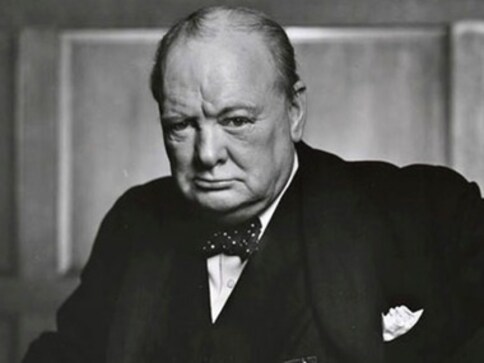
Editor's note: Winston Churchill has been venerated as a resolute statesman and one of the great political minds of the last century. However, as Madhusree Mukerjee revealed in her book — Churchill’s Secret War: The British Empire and The Ravaging of India during World War II — his deep-seated bias against Indians precipitated one of the world’s greatest man-made disasters — the Bengal Famine of 1943, which resulted in the deaths of over four million Indians. Churchill’s Secret War places this overlooked tragedy into the larger context of World War II, India’s freedom struggle and Churchill’s legacy. A new edition of the book has been released by Penguin Random House to observe the 75th year of the Bengal Famine.
***
For three months, Viceroy Linlithgow had been warning about a food crisis in India, and earlier that March a member of his council, Sir
Ramaswami Mudaliar, had told the War Cabinet’s shipping committee of ‘some danger of famine conditions, particularly in Calcutta and
Bombay’. Wheat was available in Australia, but all Indian ships capable of the round trip were engaged in the war effort. Moreover, in January the prime minister had brought most of the merchant ships operating in the Indian Ocean over to the Atlantic, in order to bolster the United Kingdom’s stocks of food and raw materials. He was reluctant to release vessels to carry grain to the colony, because lowered stocks at home would compromise the British economy and limit the War Cabinet’s ability to pursue military operations of its choice — and
because his hostility towards Indians was escalating.
The Chancellor of the Exchequer, Sir Kingsley Wood, had long been warning that India had erased its traditional debt to the United Kingdom and was instead becoming a major creditor. The sterling debt owed to the colony was mounting at a million pounds a day. It would fall due right after the war, just when a ravaged if liberated Europe would have to be fed. Food in the post-war era would be scarce worldwide and expensive to import — and His Majesty’s Government would already be bankrupt from paying for the war. In consequence, maintaining British food stocks had become crucially important to the War Cabinet and the debt to India a source of profound frustration.

Cover for Churchill’s Secret War: The British Empire and The Ravaging of India during World War II
On 16 September 1942, Amery had recorded in his diary: ‘Winston burbled away endlessly, the general theme being that it was monstrous to expect that we should not only defend India and then have to clear out but be left to pay hundreds of millions for the privilege.’ The Secretary of State for India strove to explain that the debt had little to do with the defence of the colony, but arose from its contributions in manpower and materials to the war in the Middle East and North Africa. ‘It is an awful thing dealing with a man like Winston who is at the same moment dictatorial, eloquent and muddleheaded,’ Amery wrote eight days later. ‘I am not sure that I ever got into his mind that India pays for the whole of her defence including the British forces in India, or that there is no possible way of reducing these accumulating balances except by stopping to buy Indian goods or employing Indian soldiers outside India.’
The prime minister announced at a War Cabinet meeting that the sterling debt should be neutralised by a counterclaim: a bill presented to India for its defence by the United Kingdom. At the very least, he insisted, the financial agreement forged in April 1940 should be revised to make the colony pay more of the costs of the war. Viceroy Linlithgow had already warned against this course of action: ‘If any suggestions were made that it was doubtful whether India would in due course receive value for her sterling balances, the reaction on India’s war effort could not fail to be disastrous.’ Should the United Kingdom signal its desire to renege on its financial commitments, then industrialists, contractors and even peasants would anticipate a drop in the value of the rupee and baulk at supplying goods for cash.
The sterling debt arose from the fact that commodities were being continually drawn from India with no recompense beyond the promise of payment in the future. The indiscriminate printing of paper money was enabling the Government of India to acquire supplies for the war effort, both within the country and without. But the situation was volatile: inflation was poised to combine with a shortage of every necessity of life to bring disaster to the colony’s poor. Amery did not anticipate that the Government of India’s warning of August 1942 —that inflationary financing might lead to ‘famines and riots’ — would actually come to pass. He was, however, cognisant of the risk posed by such a method of war financing to the war effort itself. Should Indians come to believe that His Majesty’s Government would not keep its promises, the torrent of supplies from the colony would dry up.
‘Winston cannot see beyond such phrases as “Are we to incur hundreds of millions of debt for defending India in order to be kicked out by the Indians afterwards?”’ Amery confided to his diary. ‘But that we are getting out of India far more than was ever thought possible and that India herself is paying far more than was ever contemplated when the present settlement was made, and that we have no means of
making her pay more than she wants or supplying goods unpaid for, is the kind of point that just doesn’t enter into his head.’ The prime
minister was aware that the sterling debt was inverting the economic relationship between colony and colonizer. After the war, money would flow from Britain to India, not as investment to be repaid with interest but as remittance. Whatever the romance of empire, a colony that drains the Exchequer is scarcely worth having — and that reality, notes historian Dietmar Rothermund, would make it easier for India to be finally released.
Another source of irritation to Churchill was the 1940 US Republican presidential candidate, Wendell Willkie. In an October 1942 broadcast, he reported to Americans what he had learned on a world tour. ‘When the aspirations of India for freedom were put aside to some future unguaranteed date, it was not Great Britain that suffered in public esteem in the Far East,’ Willkie said. ‘It was the United States.’ The inhabitants of Asia ‘cannot tell from our vague and vacillating talk whether we really do stand for freedom, or what we mean by freedom’. Willkie’s criticism induced President Roosevelt to reiterate that the Atlantic Charter applied to the entire world and to appoint a seasoned diplomat, William Phillips, as his ‘Personal Representative with the rank of Ambassador’ to India.
Apparently stung by the disapproval emanating from the United States, Churchill made on 11 November 1942, what would become his most quoted pronouncement on India. ‘We mean to hold our own,’ he declared in Parliament. ‘I have not become the King’s First Minister in order to preside over the liquidation of the British Empire.’ According to Amery, the next day he ‘went off the deep end in a state of frantic passion on the whole subject of the humiliation of being kicked out of India by the beastliest people in the world next to the Germans’.
Madhusree Mukerjee won a Guggenheim fellowship to write her previous book, The Land of Naked People. She is a senior editor with Scientific American and lives in New York City.
in 1915 britishers made the mistake of mass shootgting of indian soldiers IN SINGAPORE GETTING PUBLISHED .but in 1945 britishers were more careful as not to publish anything about massacre in IMMENSTADT GERMANY CLOSE TO SWISS BORDER OF INDIAN SOLDIERS
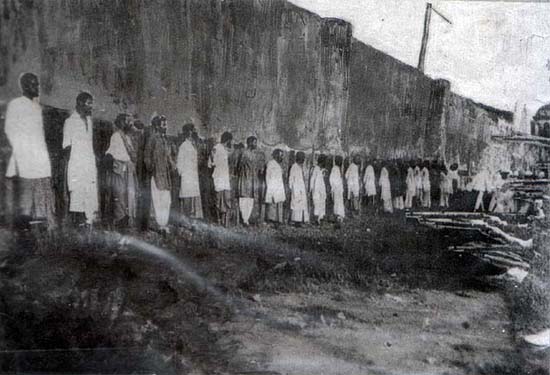
1915_Singapore_Mutiny.jpg (550 × 375 pixels, file size: 44 KB, MIME type: image/jpeg)
 | This is a file from the Wikimedia Commons. Information from its description page there is shown below. Commons is a freely licensed media file repository. You can help. |
Summary
| Description | English: The public executions of convicted mutineers of 5th Light Infantry at Outram Road, Singapore, circa March 1915. |
| Date | c. March 1915; originally uploaded to en.wikipedia on 14 June 2007. |
Role in Indian independence
However, in political terms Bose may have been successful, owing to events that occurred within India after the war.[7][8] After the war, the soldiers and officers of the Free India Legion were brought as prisoners to India, where they were to be brought to trial in courts-martial along with Indians who were in the INA. Their stories were seen as so inflammatory that, fearing mass revolts and uprisings across the empire, the British government forbade the BBC from broadcasting about them after the war.[28] Not much is known of any charges made against Free India Legion soldiers, but the Indian National Army trials that were initiated had the sentences they issued commuted or charges dropped, after widespread protest and several mutinies.


No comments:
Post a Comment