Earlier
this year, I was in Rishikesh, the first town that the River Ganges
meets as it leaves its Himalayan home and embarks upon its long journey
through the north Indian plains. The town's place in Indian mythology is
not as secure as that of Hardwar, which lies a few miles downstream and
which periodically hosts the Kumbh Mela festival of Hinduism; nor is it
as famous as Allahabad or Benares, even holier cities further down the
Ganges. People seeking greater solitude and wisdom usually head deep
into the Himalayas. With its saffron-robed sadhus and ashrams, its yoga
and meditation centres, and its internet and dosa cafes, Rishikesh
caters to a very modern kind of spiritual tourist: the Beatles came here
in the Sixties to learn from Maharishi Mahesh Yogi. Their quick
disillusionment seems not to have deterred the stylishly disaffected
members of the western middle class who can be found wandering the
town's alleys in tie-dye outfits, trying to raise their kundalini in
between checking their Hotmail accounts.
I was in Rishikesh to see my aunt, who has just retired to one of the
riverside ashrams. She has known a hard life: widowed when she was in
her thirties, she worked in small, badly paid teaching jobs to support
her three children. In my memory, I can still see her standing at
exposed country bus stops in the middle of white-hot summer days. She
had come to know comfort, even luxury, of sorts in later life. Her
children travel all over the world as members of India's new globalised
corporate elite; there are bright grandchildren to engage her at home.
But she was happiest in Rishikesh, she told me, living as frugally as
she had for much of her life, and devoting her attention to the end of
things.
True detachment, however, seemed as difficult to achieve for her as
for the spiritual seekers with e-mail. I had only to mention the
political situation - India was then threatening to attack Pakistan -
for her to say, angrily: "These Muslims need to be taught a lesson. We
Hindus have been too soft for too long."
In the past decade, such sentiments have become commonplace among the
upper-caste Hindus, both in India and abroad, who form the most loyal
constituency of the Hindu-nationalist Bharatiya Janata Party (BJP). They
were amplified most recently in Gujarat during the BJP-assisted
massacre of more than a thousand Muslims; they go with a middle-class
pride in the international prominence of Indian beauty queens, software
professionals and Bollywood. Perhaps I wouldn't have found anything odd
about my aunt's anti-Muslim passions had I not later gone up to her
monastic cell and noticed the large garlanded poster of a well-known
Sufi saint of western India.
Did she know that she revered someone born a Muslim? The folk
religion to which the Sufi saint belongs, and which millions of Indians
still practise, does not acknowledge such modern political categories as
Hindu and Muslim. The discrepancy between the narrow nationalist
prejudices my aunt had inherited from her class and caste and the
affinities she generously formed in her inner world of devotion and
prayer is not easily understood; but it is part of the extraordinary
makeover undergone by Hinduism since the 19th century, when India first
confronted the west and its universalist ideologies of nationalism and
progress.
Although it contains the world's third-largest population of Muslims,
India, for most people outside it, is a country of "Hindus"; even a
"Hindu civilisation", in Samuel Huntington's millenarian world-view.
Yet
Hinduism was a 19th-century British invention. Even the word Hindu
itself is of non-Hindu origin. It was first used by the ancient Persians
to refer to the people living near the River Indus (Sindhu in
Sanskrit). It then became a convenient shorthand for the rulers of
India; it defined those who were not Muslims or Christians.
The persistence of such labels in the west is due not just to
ignorance, or to some lingering Christian fear of heathens. Perhaps the
urge to fix a single identity for diverse communities comes naturally to
people in the highly organised and uniform societies of the west, where
cultural diversity now usually means the politically expedient and
hardened identities of multiculturalism. Perhaps people who themselves
are defined almost exclusively by their citizenship in the nation state
and the consumer society cannot but find wholly alien the pre-modern
world of multiple identities and faiths in which most Indians still
live.
Certainly, most Hindus themselves felt little need for precise
self-descriptions, except when faced with questions about religion on
official forms. Long after their encounter with the monotheistic
religions of Islam and Christianity, they continued to define themselves
through their overlapping allegiances to family, caste, linguistic
group, region and devotional sect. Religion to them was more
unselfconscious practice than rigid belief. Their rituals and deities
varied greatly. Both snakes and the ultimate reality of the universe
were worshipped in the same region, sometimes by the same person.
Religion rarely demanded, as it did with many Muslims or Christians,
adherence to a set of theological ideas prescribed by a single prophet,
book or authority.
This is why a history of Hinduism, no matter how narrowly conceived,
has to describe in effect several very parochial- seeming Indian
religions, almost none of which contained the evangelical zeal to save
the world. The first of these - the Vedic religion - began with the
nomads and pastoralists from central Asia who settled north India in the
second millennium BC. It was primarily created by the priestly class of
Brahmans, who conducted fire sacrifices with the help of the Vedas, the
earliest known Indian scriptures, in order to stave off drought and
hunger. But the Brahmans, who also formulated the sacred and social
codes of the time, wished to enhance their own glory and power rather
than propose a new all-inclusive faith; they presented themselves as the
most superior among the four caste groups that emerged during Vedic
times and which were based upon racial distinctions between the settlers
and the indigenous population of north India, and then upon a division
of labour.
A new religion was also far from the minds of the Buddhists, the
Jains, and other philosophical and cultural movements that emerged in
the sixth and fifth centuries BC to challenge the power of the Brahmans
and of the caste hierarchy. People dissatisfied with the sacrificial
rituals of the Vedic religion later grew attracted to the egalitarian
cults of Shiva and Vishnu that became popular in India around the
beginning of the first century AD. However, the Brahmans managed to
preserve their status at the top of an ossifying caste system. They
zealously guarded their knowledge of Sanskrit and esoteric texts, and
their expertise in such matters as the correct pronunciation of mantras.
Their specialised knowledge and pan-Indian presence gave them a hold
over ruling elites even as the majority of the population followed its
own heterodox cults and sects. Their influence can be detected in such
Indian texts as the
Bhagavad-Gita which, though acknowledging
the irrelevance of ritual sacrifices, made a life of virtue inseparable
from following the rules of caste.
But India remained too big and diverse to be monopolised by any one
book or idea. The Hindu nationalists present the Muslims who ruled India
for eight centuries as the flag-bearers of an intolerant monotheism.
Yet there was even more religious plurality during that period. Sufism
mingled with local faiths; the currently popular devotional cults of
Rama and Krishna, and the network of ashrams and sects, expanded fast
under the Moghul empire. Medieval India furnishes more evidence of
sectarian violence between the worshippers of Shiva and Vishnu than
between Hindus and Muslims.
In the 18th century, the British were both appalled and fascinated by
the excess of gods, sects and cults they found in India. It was similar
to the pagan chaos that a Christian from the eastern provinces of the
Roman empire might have encountered in the west just before
Constantine's conversion to Christianity. Like the powerful Christians
in Rome, the British in India sought and imposed uniformity.
Early 18th-century British scholars of India were familiar at home
with the monotheistic and exclusive nature of Christianity. When
confronted by diverse Indian religions, therefore, they tended to see
similarities, even though these were usually as superficial as those
between Judaism, Christianity and Islam. The British assumed that
different religious practices could exist only within a single
overarching tradition. Equally - because they came from a society that
had a relatively high level of literacy - they thought that Indian
religion must have canonical texts, just as Christianity did. Their
local intermediaries tended to be Brahmans, who alone knew the languages
- primarily Sanskrit - needed to study such ancient Indian texts as the
Vedas and the
Bhagavad-Gita. Together, the British scholars
and their Brahman interpreters came up with a canon of sorts, mostly
Brahmanical literature and ideology, which they began to identify with a
single Hindu religion.
The Brahmanical literature so systematised later created much of the
appeal of Indian culture for its foreign connoisseurs, such as the
German Romantics, Schopenhauer, Emerson and Thoreau. It also provided
the British with the standards by which to judge the state of
contemporary religion in India. As few Indians at the time seemed
capable of the sublime sentiments found in the
Bhagavad-Gita and the
Rig-Veda,
Hinduism began to seem a degenerate religion, full of such social evils
as widow-burning and untouchability, and in desperate need of social
engineering: an idea that appealed both to British colonialists and
their Brahman collaborators, who had long felt threatened by the
non-Brahmanical forms of religion that most Indians followed. It was
equally convenient to blame the intrusion of Islam into India for
Hinduism's fallen state, even for the caste system, and to describe
Hindus as slaves of Muslim tyrants: a terrible fate from which the
British had apparently rescued them in order to prepare their path to a
high stage of civilisation.
These ideas about the Muslim tyrants, Hindu slaves and British
philanthropists were originally set out in such influential books as
James Mill's History of British India, which now tell you more
about the proselytising vigour of some Enlightened Scots and
utilitarians than about Indian history. Nevertheless, they had a
profound impact on a new generation of upper-caste Indians who had
enjoyed a western-style education. They wished to imitate the success of
the British; do for India what a few enterprising men had done for a
tiny island; and they found a source of nationalist pride in the newly
minted "Hinduism".
Only a tiny minority of upper-caste Indians had known much about the
Bhagavad-Gita
or the Vedas until the 18th century, when they were translated by
British scholars and then presented as sacred texts from the
paradisiacal age of this "Hinduism". But in the 19th century, movements
dedicated to reforming "Hinduism" and recovering its lost glory grew
rapidly, inspired by the ideas of progress and development that British
utilitarians and Christian missionaries aggressively promoted in India.
Intellectuals in Muslim countries that were exposed to European
imperialism also absorbed western influences, but their distrust of the
Christian and secular west was deeper. Unlike Muslims, the Hindus tended
to borrow more than they rejected. Rammohan Roy (1772-1832), who is
often called the "father of modern India", was a Unitarian. He founded
the Brahmo Samaj, a reformist society that influenced Rabindranath
Tagore and Satyajit Ray, among other leading Indian intellectuals and
artists, as part of an attempt to turn Hinduism into a rational,
monotheistic religion. The social reformer Dayananda exhorted Indians to
return to the Vedas (which contained, according to him, all of modern
science), and echoed British missionary denunciations of such "Hindu
superstitions" as idol-worship and the caste system. Even the more
secular and catholic visions of Gandhi and Nehru - the former a devout
Hindu, the latter an agnostic - accepted the premise of a "Hinduism"
that had decayed and had to be reformed.
Gandhi drew his political imagery from popular folklore; it made him
more effective as a leader of the Indian masses than the upper-caste
Hindu politicians who relied upon a textual, or elite Hinduism. But it
was Swami Vivekananda (1863-1902) who was mostly responsible for the
modernisation of Hinduism. Vivekananda was the middle-class disciple of
the illiterate mystic Ramakrishna Paramhansa; but he moved far from his
guru's inward-looking spirituality in his attempt to make Hinduism
intellectually respectable to both westerners and westernised Indians.
In his lectures in England and America, where he acquired a mass
following, he presented India as the most ancient and privileged fount
of spirituality. At the same time, he exhorted Hindus to embrace western
science and materialism in order to shed their backwardness and
constitute themselves into a manly nation.
Vivekananda borrowed from both British-constructed Hinduism and
European realpolitik, and thus articulated the confused, aggressive
desires of a westernised Indian bourgeoisie that was trying to find its
identity. But his ambition of regenerating India with the help of
western techniques did not sunder him entirely from folk religious
traditions. He remained a mystic; and his contradictory rhetoric now
seems to prefigure the oddly split personality of the modern Hindu,
where devotion to a Muslim saint can coexist with an anti-Muslim
nationalism.
The marriage of Indian religiosity and western materialism that
Vivekananda tried to arrange makes him the perfect patron saint of the
BJP, a party of mostly upper-caste, middle-class Hindus that strives to
boost India's nuclear and information technology capabilities and also
reveres the cow as holy. A hundred years after Vivekananda's death, the
BJP has come closest to realising his project of westernising Hinduism
into a nationalist ideology: one that has pretensions to being
all-inclusive, yet demonises Muslims and seeks to pre-empt with its
rhetoric of egalitarianism the long-overdue political assertion of
India's lower-caste groups.
Vivekananda's modern disciples are helped by the rise of the Indian
bourgeoisie. Affluent, upper-caste Indians, in India and abroad, largely
bankrolled the rise of Hindu nationalists, and long for closer military
and economic ties between India and western nations; globalisation
helps them work faster towards Vivekananda's desired alliance between an
Indian elite and the modern west. As a global class, they are no less
ambitious than the one which in the Roman empire embraced Christianity
and made it an effective tool of this-worldly power. Hinduism in their
hands has never looked more like the Christianity and Islam of popes and
mullahs, and less like the multiplicity of unselfconsciously tolerant
faiths it still is for most Indians. Their growing prominence suggests
that Vivekananda may yet emerge as more influential than Gandhi, Nehru
or Tagore - the three great Indian leaders, whose legacy of liberal
humanism middle-class India seems to have frittered away. Their quest
for western-style machismo, for economic and military muscle, seems to
be taking India towards times as intellectually and spiritually
oppressive as those the west experienced after its elites chose a severe
monotheism as their official ideology.
COMMENT:- HINDU AND MUSLIM PARTIES FORMED BY CURZON WAS PART OF BRITISH PLAN TO DIVIDE AND RULE
https://www.aljazeera.com/.../partition-british-game-divide-rule-170808101655163.ht...
Aug 10, 2017 - Before leaving India, the British made sure a united India would not be ... This was all part of the policy of divide and rule, systematically ...
Search Results
Featured snippet from the web
The divide and rule was one of the most effective policies adopted by the British
to acquire political superiority over the subcontinent. As we know
there were a large number of princely states in India. ... Also in 1905
when Lord Curzon was the Viceroy of India, he decided to partition Bengal.
PAKISTAN WAS HANDED OVER TO BRITISH MADE MUSLIM LEAGUE PARTY LED BY BRITISH STOOGE JINNAH
https://www.economist.com/node/21644118/comments
None of their leaders was ever jailed - Jinnah not once ever went to jail. .... He was a British stooge, a well paid agent of the British who used him to undermine ...
Dec 22, 2017 - By Sunil Kumar. The British Empire and its most ardent defendant Churchill definitely hated Gandhi and the Congress; as it posed to the ...
BRITISH PLAN TO HAND OVER "HINDU" INDIA TO BRITISH MADE R.S.S. AND HINDU MAHASABHA DID NOT MATERIALIZE IN 1947
LATER BRITISH GUIDANCE WAS GIVEN IN 1970'S "TO" ; ESPECIALLY BECAUSE U.S.A. WAS ANGRY WITH INDIA AND CONGRESS PARTY FOR BREAKING UP PAKISTAN WHO WAS AND IS A U.S. ALLY ;AND MAKING BANGLADESH OUT OF EAST PAKISTAN
https://www.thehindu.com/2005/06/30/stories/2005063004211200.htm
Jun 30, 2005 - WASHINGTON: The former United States President, Richard M. Nixon, referred privately to Prime Minister Indira Gandhi as an "old witch" and ...
THE REST IS HISTORY .
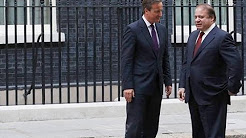
British Prime Minister, David
Cameron Wednesday described
Pakistan's enemy as his
enemy and that
Pakistan's progress is in ...
LOOK AROUND AND SEE WHAT IS HAPPENING NOW IN INDIA